
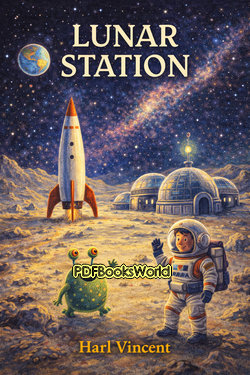
Lunar Station
by Harl Vincent
Danger, Exploration, and Conflict on the Moon
Lunar Station by Harl Vincent is a classic pulp science fiction adventure set within a dangerous mining and research station on the Moon. Written during the golden age of speculative fiction, the story combines lunar exploration, scientific mystery, and interplanetary conflict while examining humanity’s ambition to expand beyond Earth into hostile extraterrestrial environments.
Vincent presents the Moon not as a lifeless wasteland alone, but as a frontier containing hidden dangers, strange civilizations, and opportunities capable of transforming human destiny.
A Crisis at the Lunar Base
The story follows Bill Bonwitt, chief engineer at a lunar mining station where mercury extraction operations suddenly descend into chaos after a mysterious shift in the Moon’s axis creates dangerous conditions throughout the colony.
As the crisis deepens, Bonwitt uncovers evidence that hidden motives and secret plans threaten not only the lunar station itself but possibly Earth as well. Beneath the Moon’s surface lies an unexpected underground world inhabited by the mysterious Selenites, an advanced native civilization with ambitions and fears of its own.
The discovery transforms what first appears to be a technical disaster into a larger struggle involving survival, political conflict, and the future relationship between humanity and alien intelligence.
Conflict Beneath the Lunar Surface
A major theme throughout the story is the danger created by greed and exploitation during scientific expansion. Vincent repeatedly explores how human ambition and rivalry may threaten peaceful coexistence even in the vastness of space.
The work also reflects early twentieth-century fascination with lunar colonization and hidden civilizations. The Moon becomes both a scientific frontier and a mysterious world filled with unknown possibilities.
At the same time, the story emphasizes courage, technical skill, and adaptability in environments far removed from ordinary human experience.
This blend of scientific speculation and adventurous suspense gives the narrative much of its enduring pulp appeal.
Science Fiction Themes Explored Throughout the Story
- Lunar Colonization: Human settlements attempt survival within hostile extraterrestrial conditions.
- Hidden Alien Civilizations: The Moon conceals intelligent life beneath its surface.
- Scientific Exploration and Risk: Technology and discovery create both opportunity and danger.
- Greed and Power Struggle: Rival ambitions threaten cooperation and survival.
- Human Adaptation Beyond Earth: Characters confront physical and psychological challenges of space life.
Harl Vincent’s Pulp Adventure Style
Lunar Station demonstrates Harl Vincent’s ability to combine imaginative planetary settings with suspenseful action and scientific ideas. His writing remains energetic, dramatic, and strongly focused upon maintaining momentum and mystery throughout the narrative.
Vincent consistently portrays space exploration as thrilling, dangerous, and filled with unpredictable discoveries.
Why the Story Still Holds Science Fiction Interest
Modern readers continue finding Lunar Station engaging because its themes of lunar exploration, alien contact, technological danger, and survival beyond Earth remain central to science fiction storytelling today. The story also reflects early imaginative visions of Moon colonization decades before real human lunar missions occurred.
For readers interested in Moon adventures, hidden civilizations, classic pulp science fiction, speculative exploration, and interplanetary suspense, this work remains imaginative, exciting, and historically fascinating.
Similar Genres
About the Author
Harl Vincent was an American science fiction writer whose imaginative stories became a familiar feature of the golden age of pulp magazines. Writing during the early decades of modern science fiction, Vincent explored themes of space travel, advanced technology, alien civilizations, and scientific discovery. Explore Harl Vincent books to discover the author's life, literary career, and access notable works.