
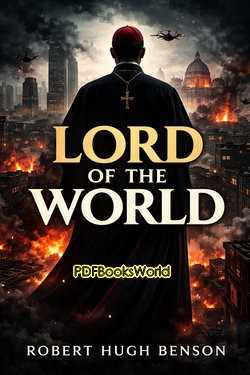
Lord of the World
by Robert Hugh Benson
Power, Religion, and a Chilling Future in Lord of the World
Lord of the World by Robert Hugh Benson is a powerful dystopian novel that imagines a future world shaped by political control, technological progress, and the decline of traditional religion. First published in 1907, the book is often considered one of the earliest modern dystopian novels.
Blending science fiction, political drama, and religious themes, the story presents a future society where global unity and material progress come at the cost of spiritual freedom and individuality.
A Future World Under Global Control
The novel takes place in a future where nations have become increasingly unified under centralized political authority.
In this world:
- Technology shapes daily life
- Modern transportation connects the globe
- Traditional religion loses influence
- Political systems dominate public thought
As society becomes more secular and politically organized, conflict grows between spiritual belief and worldly power.
Main Characters
- Father Percy Franklin – A Catholic priest deeply concerned about the spiritual direction of the modern world.
- Julian Felsenburgh – A charismatic political leader who gains enormous international influence and inspires intense devotion.
- Mabel Brand – A woman emotionally affected by the dramatic social and political changes transforming society.
Major Themes in the Novel
- Political Power and Control
The novel explores how centralized authority can influence thought, culture, and personal freedom. - Religion Versus Secular Society
Benson examines conflict between spiritual faith and a modern society focused mainly on material progress. - The Danger of Blind Devotion
The story questions how charismatic leaders can gain dangerous levels of influence over the public. - The Future of Humanity
The novel reflects anxieties about technological advancement and moral decline.
A Remarkably Early Dystopian Vision
Long before novels like 1984 or Brave New World, Benson imagined a future shaped by mass politics, global systems, and ideological control.
Many readers find the novel striking because of its discussions involving:
Globalization, media influence, political manipulation, technological progress, and the tension between public unity and personal belief.
Some ideas in the novel continue to feel surprisingly modern.
Robert Hugh Benson’s Writing Style
Robert Hugh Benson combines dramatic storytelling with philosophical and religious reflection.
His style includes:
- Serious moral themes
- Political tension
- Emotional conflict
- Symbolic imagery
- Apocalyptic atmosphere
The novel balances personal struggles with large global events, creating both emotional and intellectual intensity.
Why the Novel Still Attracts Readers
Lord of the World continues to interest readers because of its unusual mixture of dystopian fiction, political speculation, and spiritual themes.
Readers often appreciate the book for its:
- Early dystopian ideas
- Thought-provoking themes
- Political and religious tension
- Dark futuristic atmosphere
- Psychological and philosophical depth
The novel has also gained attention for appearing to anticipate certain modern technological and political developments.
A Novel That Sparked Debate
Since publication, the book has inspired discussion among religious readers, political thinkers, and science fiction fans.
Some readers interpret the novel mainly as religious allegory, while others focus on its warnings about political power and mass ideology.
This combination of interpretations has helped the novel remain relevant across different generations.
Who Should Read This Book?
Lord of the World is especially suited for readers interested in:
Dystopian fiction, religious literature, political philosophy, speculative fiction, and early science fiction classics.
Readers who enjoy thoughtful and idea-driven novels may find the book especially compelling.
Final Thoughts
Lord of the World by Robert Hugh Benson is a dark and thought-provoking vision of the future that explores power, faith, technology, and the human search for meaning.
Combining dystopian imagination with philosophical reflection, the novel remains one of the most unusual and influential early works of speculative fiction.
Similar Genres
About the Author
Robert Hugh Benson was an English novelist, priest, essayist, and religious writer whose fiction explored faith, morality, and the spiritual challenges of the modern world. The son of an Archbishop of Canterbury, Benson later embraced Roman Catholicism, an experience that profoundly shaped his literary career. Explore Robert Hugh Benson books to discover the author's life, literary career, and access notable works.