
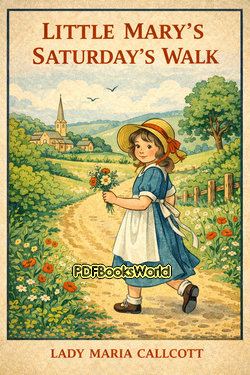
Little Mary's Saturday's walk
by Lady Maria Callcott
Childhood Innocence, Nature, and Moral Lessons in Early Children’s Literature
Little Mary's Saturday's Walk by Lady Maria Callcott is a gentle educational story for children that combines moral instruction, observation of nature, and affectionate family guidance within the setting of an ordinary countryside walk. Written during the nineteenth century, the book reflects the era’s belief that children’s literature should both entertain and cultivate kindness, curiosity, discipline, and moral understanding.
Callcott presents childhood as a period of learning shaped through direct experience with the natural world, respectful conversation, and thoughtful observation of everyday life.
A Walk Filled with Discovery
The story follows young Mary as she spends part of her Saturday exploring the countryside under the guidance of caring adults. During the walk, she encounters flowers, animals, landscapes, village scenes, and ordinary people whose presence becomes an opportunity for instruction and reflection.
Rather than focusing upon dramatic adventure, the narrative emphasizes quiet discovery and gradual learning through conversation and observation. Mary’s experiences encourage attentiveness to beauty, compassion toward others, and appreciation for the world surrounding her.
The book reflects a tradition of educational storytelling in which simple activities become occasions for moral and intellectual development.
At the same time, the natural environment plays an important role in shaping Mary’s imagination and emotional sensitivity.
Its tone combines warmth, gentleness, instruction, and domestic comfort.
Nature and Moral Education
A major theme throughout the story is the belief that children learn best through direct engagement with the world around them. Callcott repeatedly demonstrates how simple observations of plants, animals, weather, and human behavior can become valuable moral and educational lessons.
The work also reflects nineteenth-century educational ideals emphasizing patience, obedience, sympathy, and appreciation for nature as important aspects of character formation.
Rather than presenting learning as harsh discipline alone, the story encourages curiosity and emotional sensitivity through gentle instruction.
This educational philosophy gives the narrative much of its lasting charm.
Literary and Educational Themes Explored Throughout the Story
- Childhood Curiosity and Learning: Mary develops understanding through observation and experience.
- Nature and Appreciation of the Countryside: The natural world becomes a source of beauty and education.
- Moral Instruction and Kindness: Everyday encounters encourage sympathy and good behavior.
- Family Guidance and Conversation: Adults shape learning through patient explanation and encouragement.
- Simple Domestic Life: Ordinary routines become meaningful opportunities for growth.
The story reflects many qualities associated with early nineteenth-century educational literature for children.
The Importance of Gentle Learning
One of the work’s strongest ideas is that education should encourage both knowledge and emotional development. Callcott repeatedly demonstrates how kindness, curiosity, and attentiveness may be cultivated through simple experiences rather than rigid instruction alone.
The story also reveals the period’s belief that nature possessed moral and spiritual value capable of shaping children’s character positively.
This combination of affection and instruction gives the narrative enduring warmth.
Lady Maria Callcott’s Educational Writing Style
Little Mary's Saturday's Walk demonstrates Lady Maria Callcott’s ability to combine storytelling, moral reflection, and descriptive observation into accessible literature for young readers.
The writing remains calm, clear, and strongly focused upon nurturing curiosity and moral awareness through pleasant domestic scenes and natural imagery.
Callcott consistently presents childhood education as an experience connected to kindness, observation, and thoughtful guidance.
Why the Story Still Holds Literary and Historical Interest
Modern readers continue finding Little Mary's Saturday's Walk valuable because it preserves early nineteenth-century attitudes toward childhood education, family life, and moral storytelling.
The book also provides insight into the development of children’s literature during a period when writers increasingly emphasized emotional sensitivity and educational value alongside entertainment.
Its themes of learning, kindness, curiosity, and appreciation for nature continue appealing to readers interested in classic children’s literature and historical education.
For readers interested in children’s stories, educational literature, nineteenth-century family life, moral tales, nature writing, and early childhood education, this work remains gentle, thoughtful, and historically charming.
Similar Genres
About the Author
Lady Maria Callcott, also known as Maria Graham, was an English travel writer, children's author, illustrator, and historian whose works reflected her wide-ranging interests in education, geography, art, and culture. Having traveled extensively through Europe, South America, and Asia, she brought firsthand knowledge and careful observation to her writing. Explore Lady Maria Callcott books to discover the author's life, literary career, and access notable works.