
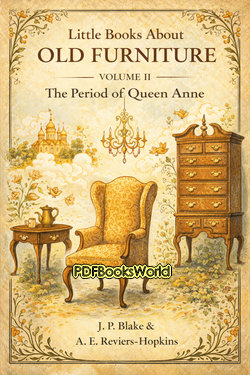
Little Books About Old Furniture - Volume II - The Period of Queen Anne
by J. P. Blake
Introduction
Little Books about Old Furniture, written by J. P. Blake and A. E. Reveirs Hopkins, explores the elegance and craftsmanship of furniture created during the Queen Anne period. Although the style carries the name of Queen Anne, it is less about royal symbolism and more about identifying a distinctive era in English decorative arts. This period, which flourished in the early eighteenth century, marked a transition from heavy, rigid designs to furniture that emphasized grace, comfort, and refinement.
According to Encyclopaedia Britannica’s overview of Queen Anne style, the era is often described as “the age of walnut” because walnut wood became the preferred material for English furniture makers.
The Rise of Walnut Furniture
One of the defining characteristics of Queen Anne furniture was the extensive use of walnut wood. Craftsmen admired walnut for its smooth texture, rich brown shades, and decorative grain patterns. Unlike the darker oak furniture of earlier generations, walnut pieces appeared lighter, more elegant, and visually refined.
Furniture makers used walnut to create cabinets, chairs, tables, and writing desks that featured curved legs, delicate carvings, and balanced proportions. The wood’s natural beauty often reduced the need for excessive ornamentation. Information from The Wood Database’s guide to English walnut explains how the wood’s varied tones and fine grain made it especially valued for decorative furniture.
Craftsmanship and Design
Queen Anne furniture represented a major change in interior design. Instead of large and heavily carved pieces, cabinetmakers focused on comfort and flowing shapes. Chairs became more practical, tables lighter, and storage furniture more sophisticated. Curved cabriole legs and elegant veneers became trademarks of the period.
The era also reflected the growing skill of English cabinetmakers. Many pieces displayed remarkable craftsmanship through veneering, polished finishes, and balanced proportions. Museums and historians continue to study these works because they reveal both artistic taste and social changes of the time.
Decline of Walnut Usage
Despite its popularity, walnut wood had limitations. It was relatively soft and vulnerable to worm infestation, which reduced its durability over time. As furniture trends evolved, mahogany gradually replaced walnut as the preferred material for high-quality furniture production.
Historical studies from Britannica’s article on eighteenth-century furniture styles note that imported mahogany became fashionable around the 1720s, eventually overtaking walnut in English furniture design.
Final Thoughts
The Queen Anne period remains one of the most admired eras in furniture history. Through their detailed observations, Blake and Hopkins highlight how furniture can reflect the culture, materials, and artistic values of an age. Even today, Queen Anne furniture continues to attract collectors and historians for its timeless elegance, graceful construction, and historical importance.
Similar Genres
About the Author
J. P. Blake was a British writer, researcher, and authority on antique furniture whose works introduced readers to the craftsmanship, history, and decorative arts of England's most celebrated furniture-making periods. Explore J. P. Blake books to discover the author's life, literary career, and access notable works.