
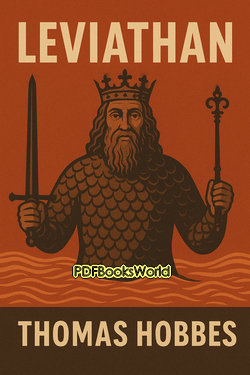
Leviathan
by Thomas Hobbes
A Groundbreaking Work on Government and Human Nature
Leviathan by Thomas Hobbes is one of the most important works in political philosophy and social theory. First published in 1651 during the English Civil War, the book explores the nature of society, government, law, and human behavior. Hobbes argues that strong political authority is necessary to prevent disorder and conflict within society.
The book became one of the earliest and most influential discussions of social contract theory, shaping modern political thought for centuries. Its ideas continue to influence philosophy, political science, law, and debates about state power.
About Thomas Hobbes
Thomas Hobbes was an English philosopher best known for his work on political theory and human nature. Living during a period of political instability and civil war, Hobbes developed ideas about authority, security, and government that challenged many traditional beliefs of his time.
Read more about Thomas Hobbes on Britannica.
Overview of the Book
In Leviathan, Hobbes describes what human life would be like without organized government. He famously argues that in a “state of nature,” people would constantly compete and fight for survival, creating a condition of fear and insecurity. According to Hobbes, individuals therefore agree to form societies and obey governments in exchange for safety and order.
The book discusses political authority, law, religion, morality, and the responsibilities of rulers and citizens. Hobbes believed that a strong central government was necessary to maintain peace and prevent civil conflict.
Main Ideas in the Book
- Social Contract Theory – Individuals give up some freedoms in exchange for security and protection.
- Human Nature – Hobbes presents humans as naturally driven by self-interest and survival.
- Strong Government – Stable authority is necessary to prevent chaos and violence.
- Law and Order – Civil laws help maintain peace within society.
Why Leviathan Is Historically Important
Leviathan helped transform political philosophy by presenting government as a human institution created through agreement rather than divine authority. Hobbes introduced ideas that later influenced modern democratic theory, constitutional law, and discussions about individual rights and state power.
The book remains widely studied in universities because of its lasting impact on philosophy and political theory.
Explore political philosophy at Stanford Encyclopedia of Philosophy.
Writing Style and Intellectual Depth
The writing style of Leviathan is detailed, analytical, and highly philosophical. Hobbes combines logic, political argument, and observations about society to build his theories about government and authority.
Although some sections can be challenging for modern readers, the book remains engaging because of its bold arguments and powerful ideas about society and human behavior.
Why Readers Still Study the Book Today
Modern readers continue to study Leviathan because many of its central questions remain relevant. Discussions about government power, personal freedom, law, security, and political stability are still important in contemporary society.
The book is especially valuable for students interested in philosophy, political science, history, sociology, and law.
Lessons From Leviathan
The book teaches that stable societies depend on cooperation, laws, and organized government. Hobbes also reminds readers that fear, conflict, and competition can threaten social order when institutions become weak. His work encourages reflection on the balance between authority and individual freedom.
Final Thoughts
Leviathan remains one of the foundational works of political philosophy because of its powerful examination of government, society, and human nature. Thomas Hobbes created a work that continues to influence political discussion and academic study around the world. Readers interested in philosophy, political theory, or intellectual history may find this classic book both challenging and rewarding.
Similar Genres
About the Author
Thomas Hobbes was an English philosopher, political theorist, and scholar whose ideas transformed the study of government, society, and human nature. Living during a period of political upheaval in seventeenth-century England, he sought to explain how stable societies could be created through reason and political order. Explore Thomas Hobbes books to discover the author's life, literary career, and access notable works.