
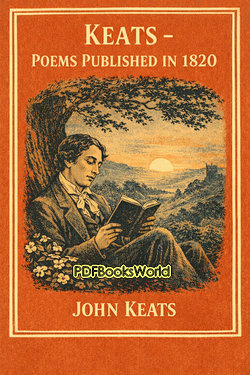
Keats - Poems Published in 1820
by John Keats
The Poetry Collection That Secured John Keats’s Literary Immortality
Rich imagery, emotional intensity, classical beauty, and meditations on mortality flow through Keats: Poems Published in 1820, the collection many readers consider the artistic peak of John Keats. Issued only a year before the poet’s death, the volume contains some of the most celebrated works in English literature, including the great odes that transformed Keats into one of the defining voices of Romantic poetry.
Although Keats lived only twenty-five years, the poems in this collection established a literary legacy that continues to influence poetry worldwide.
A Poet Obsessed With Beauty and Impermanence
Keats constantly returns to a painful but fascinating question: how can beauty survive in a world shaped by suffering, change, and death?
His poems often balance intense sensory pleasure against awareness of human fragility.
Birdsong, autumn fields, ancient art, dreams, and love all become temporary moments of beauty standing against mortality.
This emotional tension gives the collection extraordinary depth.
The Famous Odes That Define the Collection
Several masterpieces within the volume remain central to English poetry.
- “Ode to a Nightingale” explores imagination, escape, and mortality
- “Ode on a Grecian Urn” reflects on art, permanence, and beauty
- “To Autumn” transforms seasonal change into lyrical perfection
- “Ode on Melancholy” examines sorrow and emotional intensity
These poems combine philosophical reflection with remarkable musical language.
The Sensory Power of Keats’s Writing
Few poets describe physical sensation as vividly as Keats. His poetry overflows with texture, color, fragrance, sound, and movement.
Readers encounter:
- Ripening fruit and fading sunlight
- Flowers, music, wine, and birdsong
- Ancient sculpture and mythological beauty
- Dreamlike landscapes suspended between reality and imagination
The language itself often feels lush and almost physical.
Romanticism at Its Height
The collection represents many ideals associated with the Romantic movement.
Emotion becomes more important than rigid logic. Nature appears spiritually meaningful. Imagination serves as a powerful creative force capable of transcending ordinary existence.
Yet Keats’s poetry also carries unusual awareness of suffering and limitation, preventing the beauty from becoming naïve or sentimental.
Joy and sorrow constantly exist together in his work.
The Musical Style of John Keats
Keats writes with extraordinary lyrical control. His lines flow with softness, rhythm, and emotional richness while maintaining careful poetic structure.
Even complicated philosophical ideas feel graceful because of the musical quality of the language.
The poems reward slow reading, allowing imagery and emotional atmosphere to unfold gradually.
Why the 1820 Poems Remain Essential Reading
Keats: Poems Published in 1820 continues to captivate readers because it captures universal human experiences through breathtaking poetic beauty. Love, mortality, imagination, memory, longing, and the passage of time all appear with emotional honesty and artistic brilliance.
For readers interested in Romantic poetry, literary beauty, philosophical reflection, and emotionally powerful verse, John Keats’s 1820 collection remains one of the great achievements of English literature.
Similar Genres
About the Author
John Keats was one of the greatest English Romantic poets, celebrated for his beautiful language, vivid imagery, and deep appreciation of nature, beauty, and human emotion. Although his literary career was remarkably short, he produced some of the finest poems in the English language, leaving a lasting influence on poetry and literature. Explore John Keats books to discover the author's life, literary career, and access notable works.