Julian
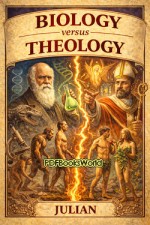
Julian was the literary name used by an author who contributed to the intellectual and religious debates of the late nineteenth and early twentieth centuries. Through thoughtful essays and analytical writing, Julian examined the relationship between science, philosophy, and religion at a time when new scientific discoveries were transforming public understanding of the natural world. Rather than avoiding controversial subjects, the author encouraged readers to consider differing viewpoints with careful reasoning and intellectual curiosity. The work Biology versus Theology reflects this spirit of inquiry, exploring how scientific knowledge and religious belief were discussed during an era of rapid change in scientific thought.
Writing in an Age of Scientific Discovery
The publication of Charles Darwin's theory of evolution and the rapid development of biology inspired widespread discussion throughout Europe and America. Scientists, philosophers, theologians, and educators debated how new discoveries should be understood and how they related to long-established religious beliefs. Writers such as Julian contributed to these conversations by presenting arguments, examining evidence, and encouraging readers to think critically about important questions concerning nature, humanity, and the origins of life.
Rather than treating science and religion as subjects that should never be discussed together, Julian viewed them as important areas of intellectual inquiry deserving careful examination. His work reflects the lively public debates of the period, when advances in geology, biology, and evolutionary theory challenged traditional interpretations and encouraged broader philosophical reflection.
A Thoughtful Examination of Science and Faith
In Biology versus Theology, Julian considers the relationship between biological science and theological thought from the perspective of his own time. The book discusses how scientific discoveries influenced public understanding of creation, evolution, and humanity's place in the natural world. Today, it is best appreciated as a historical work that documents the intellectual climate of its era rather than as a representation of current scientific or theological scholarship. Its value lies in illustrating how educated readers and writers engaged with profound questions during a period of significant scientific advancement.
A Clear and Engaging Style
Julian presents complex philosophical and scientific ideas in a direct and accessible manner. Instead of relying on technical language, the author explains arguments through logical discussion and carefully structured reasoning. This approach allows readers from a variety of backgrounds to follow the debate and understand the principal issues under consideration. The work encourages respectful reflection and demonstrates the importance of examining differing viewpoints with an open and inquisitive mind.
An Enduring Legacy
Although relatively little is known about the author behind the name Julian, Biology versus Theology continues to hold historical interest as a record of one of the most important intellectual discussions of the modern age. It preserves the perspectives and arguments that emerged as scientific discoveries reshaped public understanding of nature and humanity. Readers today can appreciate the book both as a window into nineteenth-century intellectual history and as an example of thoughtful public discourse. Visitors to PDF Books World can explore this public domain work to gain insight into the historical dialogue between science, philosophy, and religion, while appreciating the enduring importance of reasoned inquiry and respectful debate.