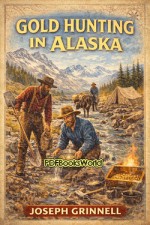
Joseph Grinnell
Joseph Grinnell was an American zoologist, naturalist, explorer, and author whose pioneering work transformed the study of wildlife and ecology in North America. Best known as the founding director of the Museum of Vertebrate Zoology at the University of California, Berkeley, Grinnell devoted his life to documenting animals, their habitats, and the changing natural environment. His meticulous field observations and scientific methods established standards that continue to influence ecological research today. Alongside his scientific publications, he wrote engaging accounts of exploration and fieldwork, including Gold Hunting in Alaska, which combines firsthand travel experiences with vivid descriptions of Alaska's landscapes and the excitement surrounding its gold fields.
A Naturalist Drawn to Exploration
Joseph Grinnell developed an early fascination with birds, mammals, and the diverse environments in which they lived. His expeditions took him across mountains, deserts, forests, and remote wilderness areas, where he carefully recorded observations that became invaluable to later generations of scientists. Grinnell believed that accurate field notes were essential for understanding changes in wildlife populations and ecosystems over time. His dedication to careful documentation laid the foundation for what is now known as the "Grinnell System" of field recording, a method still respected by researchers.
Beyond his scientific achievements, Grinnell possessed a gift for describing the natural world in language that appealed to general readers. His travel narratives captured not only the scientific importance of remote regions but also their beauty, challenges, and sense of adventure.
Exploring Alaska During the Gold Rush Era
In Gold Hunting in Alaska, Grinnell recounts experiences from a journey through Alaska during a period when the discovery of gold attracted prospectors from around the world. While the search for gold forms part of the narrative, the book also offers rich descriptions of Alaska's rugged mountains, rivers, glaciers, wildlife, and changing weather. Grinnell's keen eye for nature distinguishes the work from many other accounts of the gold rush, providing readers with valuable observations about the environment alongside the human stories of exploration and perseverance. The book serves as both an adventure narrative and a historical record of Alaska during a transformative period.
Notable Works
- Gold Hunting in Alaska – A firsthand account of travel, exploration, and life in Alaska during the era of the gold rush.
- The Biota of the San Bernardino Mountains – A landmark study documenting the wildlife and ecology of southern California.
- Animal Life as an Asset of National Parks – An influential work emphasizing the importance of wildlife conservation.
- Field Journals and Scientific Papers – Detailed records and research that helped establish modern methods of ecological field study.
An Enduring Legacy
Joseph Grinnell is remembered as one of America's greatest naturalists and one of the founders of modern ecological research. His careful observations continue to provide scientists with invaluable historical data for studying environmental change and biodiversity. At the same time, his travel writing preserves the excitement of exploration and the beauty of North America's wilderness. Gold Hunting in Alaska remains an engaging account of adventure, discovery, and the remarkable landscapes of the far north, offering readers both historical insight and a deep appreciation for the natural world. Visitors to PDF Books World can explore Grinnell's public domain writings to discover works that combine scientific curiosity, adventurous exploration, and a lasting respect for nature.