Isaac Newton
Isaac Newton was an English mathematician, physicist, astronomer, and natural philosopher whose discoveries transformed humanity's understanding of the natural world. Widely regarded as one of the greatest scientists in history, he established the foundations of classical mechanics, developed the mathematical methods that evolved into calculus, and made groundbreaking contributions to optics and astronomy. His work demonstrated that the movements of objects on Earth and the motions of celestial bodies could be explained by the same universal laws. Newton's remarkable achievements continue to influence modern science, engineering, and mathematics centuries after his lifetime.
Changing the Course of Scientific History
Newton's scientific approach combined careful experimentation with mathematical precision. His formulation of the laws of motion and the law of universal gravitation provided a unified explanation for countless natural phenomena, revolutionizing physics and astronomy. These discoveries not only advanced scientific knowledge but also laid the groundwork for future innovations in engineering, navigation, and space exploration.
Beyond mechanics, Newton investigated the nature of light, color, heat, and motion. His experiments demonstrated that white light is composed of a spectrum of colors, fundamentally changing the understanding of optics. His commitment to observation and logical reasoning established standards that continue to guide scientific research today.
Curiosity Beyond Mathematics and Physics
Newton's intellectual interests extended well beyond the subjects for which he is best known. He devoted considerable time to astronomy, theology, alchemy, chronology, and the study of ancient history. Although some of these pursuits reflected the scholarly traditions of his era, they reveal the breadth of his curiosity and his determination to understand every aspect of the natural and historical world. His wide-ranging investigations made him one of the most influential thinkers of the Scientific Revolution.
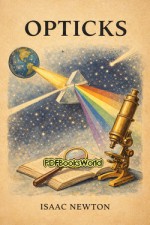
Among his landmark publications is Opticks, a pioneering work that presents his experiments on light, color, and optical phenomena. The book demonstrated the power of experimental science and remains one of the most influential works in the history of physics.
Major Works
- Philosophiæ Naturalis Principia Mathematica – Establishes the laws of motion and universal gravitation, forming the foundation of classical physics.
- Opticks – Explores the nature of light, color, reflection, refraction, and optical experiments.
- The Chronology of Ancient Kingdoms Amended – Examines ancient history through Newton's chronological research.
- Observations upon the Prophecies of Daniel and the Apocalypse of St. John – Presents Newton's studies of biblical prophecy and religious history.
- Arithmetica Universalis – A mathematical treatise covering algebraic methods and analytical techniques.
A Legacy That Continues to Shape the World
Isaac Newton's discoveries transformed the way humanity understands the universe. His combination of observation, experimentation, and mathematical reasoning established principles that remain central to modern science. Generations of scientists have built upon his work, making his influence visible in fields ranging from astronomy and engineering to physics and technology. His writings continue to inspire readers who seek to understand the laws that govern the natural world.
Readers visiting PDF Books World can explore the works of Isaac Newton and discover timeless writings that have shaped the history of science, mathematics, and humanity's understanding of the universe.