
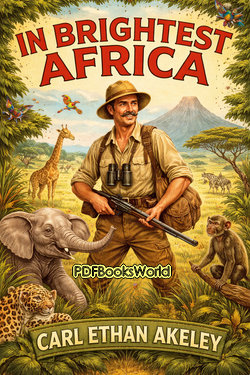
In Brightest Africa
by Carl Ethan Akeley
Exploration, Wildlife, and Adventure in the Heart of Central Africa
In Brightest Africa by Carl Ethan Akeley is a vivid travel and exploration narrative recounting expeditions through Central Africa during the early twentieth century. Written by the famous naturalist, explorer, sculptor, and pioneer of modern taxidermy, the book combines adventure, wildlife observation, scientific curiosity, and personal reflection while describing encounters with African landscapes, animals, and local communities.
Akeley presents Africa not simply as a distant wilderness, but as a region of immense natural beauty, biological richness, and dramatic danger where exploration constantly tests human endurance, courage, and adaptability.
Journeys Through the African Wilderness
The book follows Akeley’s travels across forests, mountains, rivers, and remote territories inhabited by elephants, gorillas, lions, and other wildlife that fascinated scientists and explorers of the era. He describes dangerous hunts, difficult travel conditions, and encounters with the immense scale and power of African nature.
Akeley’s expeditions were driven not only by adventure, but also by scientific interest in animal behavior, habitat preservation, and museum collection work.
Rather than portraying Africa solely through exotic fantasy, the work emphasizes close observation of wildlife and the practical realities of exploration under difficult environmental conditions.
The volume reflects the period’s growing public fascination with exploration, zoology, conservation, and natural history.
Its tone combines excitement, admiration for nature, and documentary detail.
Gorillas, Elephants, and the Natural World
A major theme throughout the book is Akeley’s deep fascination with African wildlife, particularly gorillas and elephants. His observations helped shape early scientific understanding of gorilla behavior and contributed to changing attitudes toward wildlife conservation.
He repeatedly describes the intelligence, physical power, and emotional impact of encounters with large animals living within their natural habitats.
The work also reflects the tension between hunting traditions and emerging conservation ideals during the early twentieth century.
This combination of adventure and scientific observation gives the narrative lasting historical importance.
Exploration and Natural History Themes Explored Throughout the Book
- African Exploration and Travel: Expeditions through remote landscapes reveal both danger and beauty.
- Wildlife Observation and Zoology: Detailed encounters with gorillas, elephants, and other animals shape the narrative.
- Adventure and Survival: Harsh conditions test endurance, courage, and adaptability.
- Conservation and Natural Preservation: The work reflects growing concern for protecting wildlife and habitats.
- Scientific Curiosity and Discovery: Exploration becomes a means of expanding knowledge about the natural world.
The book stands as both travel literature and an important contribution to early wildlife conservation history.
The Emotional Power of Wilderness
One of the work’s strongest ideas is that direct experience with nature transforms human understanding and emotional perspective.
Akeley repeatedly demonstrates how encounters with wild animals and untouched landscapes inspire awe, respect, and deeper appreciation for the natural world.
The book also reveals early conservationist concerns regarding the destruction of wildlife populations through uncontrolled hunting and human expansion.
This environmental awareness gives the narrative significance beyond simple adventure storytelling.
Carl Akeley’s Descriptive and Adventurous Style
In Brightest Africa demonstrates Carl Akeley’s remarkable ability to combine scientific observation, vivid landscape description, and thrilling expedition narrative into engaging nonfiction adventure.
The writing remains energetic, detailed, and strongly focused upon conveying the physical reality and emotional intensity of exploration in remote wilderness regions.
Akeley consistently presents nature as both majestic and demanding of respect.
Why the Book Still Holds Historical and Environmental Importance
Modern readers continue finding In Brightest Africa valuable because it documents African exploration and wildlife observation during a transformative period in natural history and conservation.
The book also provides insight into early twentieth-century attitudes toward zoology, big-game hunting, museum science, and the emerging movement to preserve endangered wildlife and habitats.
Its discussions of gorillas, exploration, scientific collecting, wilderness survival, and environmental appreciation continue attracting readers interested in both history and nature writing.
For readers interested in African exploration, wildlife conservation, zoology, travel literature, gorilla studies, natural history, and adventure memoirs, this work remains historically revealing, scientifically important, and vividly exciting.
Similar Genres
About the Author
Carl Ethan Akeley was an American naturalist, explorer, taxidermist, inventor, photographer, and conservationist whose pioneering work transformed the study and presentation of wildlife. Widely regarded as the father of modern museum taxidermy, he developed innovative techniques for creating lifelike animal displays that emphasized scientific accuracy and respect for nature. Explore Carl Ethan Akeley books to discover the author's life, literary career, and access notable works.