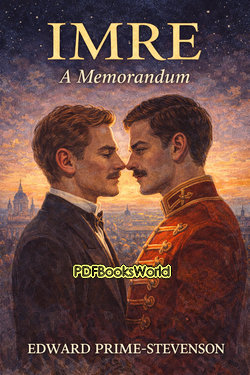
Imre: A Memorandum
by Edward Prime-Stevenson
A Groundbreaking Novel of Love, Identity, and Self-Acceptance
Imre: A Memorandum by Edward Prime-Stevenson is a pioneering early twentieth-century novel that explores same-sex love with unusual sympathy, honesty, and psychological depth. Published in 1906 under the author's pseudonym Xavier Mayne, the work stands as one of the earliest English-language novels to portray a romantic relationship between two men in a positive and affirming manner. Combining personal reflection, philosophical discussion, and emotional storytelling, the novel examines themes of identity, companionship, and the search for understanding in a society often marked by prejudice.
A Meeting in Budapest
The story is narrated by Oswald, an English expatriate living in Europe, who forms a friendship with a young Hungarian army officer named Imre von N. As their relationship develops, conversations about art, culture, friendship, and personal experience gradually reveal deeper emotions and shared concerns.
Their growing connection forms the emotional center of the novel and drives its exploration of love and self-discovery.
Principal Characters
- Oswald: The reflective narrator whose experiences shape the story.
- Imre von N.: A Hungarian officer whose friendship with Oswald develops into a profound emotional bond.
- Friends and Acquaintances: Supporting figures who help illuminate the social environment in which the characters live.
Themes Explored Throughout the Novel
- Love and Companionship: The development of a meaningful and sincere romantic relationship.
- Identity: Understanding and accepting one's true self.
- Friendship: The deep emotional connections that can grow into love.
- Social Expectations: The pressures imposed by society and convention.
- Hope and Acceptance: The possibility of happiness despite prejudice and misunderstanding.
A Revolutionary Perspective for Its Time
When the novel appeared in the early twentieth century, positive portrayals of same-sex relationships were exceptionally rare in English literature. Many contemporary works treated such subjects as tragic, scandalous, or immoral. Prime-Stevenson took a markedly different approach, presenting his protagonists as intelligent, honorable, and capable of genuine happiness.
This perspective made the novel a remarkable literary achievement and an important milestone in LGBTQ+ literary history.
Edward Prime-Stevenson's Literary Vision
Prime-Stevenson was a writer, critic, and scholar who believed that literature should portray human experience honestly and compassionately. In Imre, he combines thoughtful dialogue with psychological realism, allowing readers to understand the fears, hopes, and emotions of his characters in a nuanced way.
His emphasis on dignity and empathy distinguishes the novel from many other works of its era.
The Novel's Historical Significance
Today, Imre: A Memorandum is recognized as an important work in the history of LGBTQ+ literature. Scholars value it not only for its literary qualities but also for its role in challenging prevailing attitudes and offering representation at a time when such voices were rarely heard in mainstream publishing.
The novel provides insight into both the social realities of its period and the enduring human desire for understanding and acceptance.
Why the Novel Continues to Matter
Modern readers are often drawn to the book because of its honesty, emotional intelligence, and historical importance. Although written more than a century ago, its themes of identity, love, and belonging remain relevant. The relationship at the heart of the story continues to resonate because it is portrayed with sincerity and humanity.
The novel's message of self-acceptance and mutual understanding gives it lasting significance.
A Landmark Work of Early LGBTQ+ Literature
Imre: A Memorandum is both an engaging novel and an important cultural document. Through the relationship between Oswald and Imre, Edward Prime-Stevenson explores love, identity, and personal authenticity with sensitivity and insight. The book remains a pioneering work that helped broaden the possibilities of literary representation and continues to be appreciated for its courage, compassion, and enduring humanity.
Similar Genres
About the Author
Edward Prime-Stevenson, who also wrote under the pen name Xavier Mayne, was an American novelist, music critic, essayist, and cultural historian whose writings explored literature, music, history, and human relationships with uncommon candor and intellectual depth. Explore Edward Prime-Stevenson books to discover the author's life, literary career, and access notable works, including White Cockades , and more.