
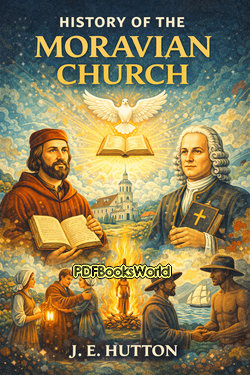
History of the Moravian Church
by J. E. Hutton
Faith, Persecution, and the Global Mission of the Moravian Church
History of the Moravian Church by J. E. Hutton is a detailed historical study tracing the origins, struggles, beliefs, and worldwide influence of the Moravian Church from its beginnings in the religious reform movements of medieval Europe to its later missionary expansion across the globe. The book explores one of the oldest Protestant traditions and highlights the Moravians’ remarkable role in Christian missions, education, worship, and spiritual renewal.
Hutton presents the Moravian Church as a community shaped by perseverance, devotion, simplicity, and strong commitment to faith despite centuries of persecution and displacement.
The Origins of the Moravian Movement
The book traces the church’s roots to the followers of Jan Hus in fifteenth-century Bohemia and Moravia, regions within present-day Czechia. Inspired by calls for religious reform before the Protestant Reformation, these believers sought simpler worship, moral renewal, and greater faithfulness to scripture.
After Hus was executed for heresy in 1415, his followers faced severe persecution, yet their movement survived and gradually developed into the Unitas Fratrum, or Unity of Brethren, later known as the Moravian Church.
Rather than disappearing under political and religious pressure, the community preserved its traditions through exile, hidden worship, and organized spiritual fellowship.
The volume reflects the broader religious conflicts that transformed Europe during the late medieval and Reformation periods.
Its tone combines historical narrative with admiration for spiritual endurance and missionary dedication.
Revival and Global Missionary Work
A major theme throughout the book is the Moravian Church’s extraordinary missionary spirit during the eighteenth and nineteenth centuries.
Under the leadership of Count Nikolaus Ludwig von Zinzendorf, the renewed Moravian community established missionary efforts across the Caribbean, Greenland, North America, Africa, and other regions.
The work emphasizes the Moravians’ commitment to evangelism, education, music, communal worship, and service among enslaved people, Indigenous communities, and remote populations.
This global missionary activity helped make the Moravian Church influential far beyond its relatively small size.
Historical and Religious Themes Explored Throughout the Book
- The Hussite and Moravian Origins: Hutton examines the church’s roots in early reform movements before Protestantism.
- Persecution and Religious Survival: The book explores exile, suppression, and perseverance under hostile political conditions.
- Missionary Expansion: Moravian missionaries carried Christianity to distant regions around the world.
- Spiritual Community and Worship: The work highlights communal life, devotional practice, and religious simplicity.
- The Influence of Count Zinzendorf: Leadership and spiritual renewal played major roles in reviving the movement.
The book stands as one of the major historical accounts of Moravian Christianity and its worldwide influence.
The Importance of Spiritual Fellowship
One of the work’s strongest ideas is that religious communities endure through shared faith, mutual support, and spiritual discipline even during persecution and hardship.
Hutton repeatedly demonstrates how the Moravians maintained unity through worship, education, missionary work, and strong communal identity.
The book also reveals the importance of music, prayer, and personal devotion within Moravian spiritual life.
This emphasis on fellowship and service gave the movement a distinctive place within Protestant history.
J. E. Hutton’s Historical and Religious Style
History of the Moravian Church demonstrates J. E. Hutton’s ability to combine careful historical research with sympathetic understanding of religious experience and spiritual culture.
The writing remains informative, organized, and strongly focused upon explaining both the historical development and religious ideals of the Moravian tradition.
Hutton consistently presents the Moravian Church as a movement defined by faithfulness, missionary zeal, and enduring spiritual purpose.
Why the Book Still Holds Historical and Religious Importance
Modern readers continue finding History of the Moravian Church important because it documents one of the oldest and most influential Protestant traditions in European and global Christian history.
The book also provides insight into religious reform movements, missionary expansion, Protestant spirituality, and the survival of persecuted communities across centuries of political and social change.
Its discussions of faith, missions, worship, persecution, and communal life continue attracting readers interested in church history and Christian traditions.
For readers interested in Christianity, Protestant history, missionary movements, European religious history, Moravian spirituality, Reformation studies, and the history of global missions, this work remains historically revealing, spiritually significant, and intellectually engaging.
Similar Genres
About the Author
J. E. Hutton, formally Joseph Edmund Hutton, was an English historian, theologian, educator, and one of the foremost scholars of the Moravian Church. He devoted much of his life to researching and documenting the history, beliefs, and global influence of the Moravian movement. Explore J. E. Hutton books to discover the author's life, literary career, and access notable works.