
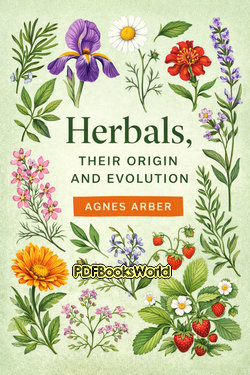
Herbals, Their Origin and Evolution
by Agnes Arber
How Ancient Plant Books Shaped the History of Medicine and Science
Herbals, Their Origin and Evolution by Agnes Arber is a fascinating study of the history of herbal books and the development of botanical knowledge across centuries. Combining science, history, literature, and art, the book explores how early scholars, physicians, and naturalists documented plants and their medicinal uses long before modern botany became a formal scientific discipline.
Agnes Arber presents herbals not merely as old medical guides, but as important historical records showing how people understood nature, healing, and scientific observation in different periods of history.
What Are Herbals?
Herbals were books describing plants and their uses, especially for medicine and healing. For centuries, these works served as important references for physicians, healers, apothecaries, and ordinary households.
Many herbals included illustrations, descriptions of plants, instructions for preparing remedies, and explanations of supposed healing properties. Some were based on careful observation, while others mixed science with folklore, myth, and traditional belief.
Before modern medicine and scientific classification systems developed, herbals represented one of the main ways people organized knowledge about the natural world.
The Historical Development of Herbal Literature
The book traces the evolution of herbals from ancient civilizations through the Middle Ages and into the Renaissance. Arber explains how early Greek and Roman writings influenced later European herbal traditions.
As printing technology improved, herbals became more widely available and increasingly detailed. Renaissance scholars began paying closer attention to direct observation and accurate plant illustration, helping lay the foundations for modern botanical science.
Arber also explores how artistic techniques improved botanical drawings, making plant identification more reliable and scientifically useful.
Important Ideas Explored in the Book
- The relationship between botany and medicine
- The evolution of scientific observation and classification
- The role of illustration in botanical study
- The influence of ancient and medieval knowledge on science
These themes show how herbals helped bridge the gap between traditional healing practices and modern scientific research.
The Importance of Botanical Illustration
One of the most interesting aspects of the book is its discussion of plant illustrations. Early herbal artists attempted to capture the appearance of leaves, flowers, stems, and roots so readers could correctly identify useful plants.
Over time, botanical illustration became increasingly accurate and artistic. These visual records played an essential role in the development of botany because they allowed scholars to compare species and communicate observations more effectively.
Arber highlights how art and science worked together in the creation of many famous herbals.
Agnes Arber’s Writing Style
Agnes Arber writes in a scholarly yet accessible style that combines historical detail with clear explanation. She treats herbals with both scientific seriousness and genuine admiration for their artistic and cultural value.
The book appeals not only to botanists and historians but also to readers interested in old books, natural history, medicine, and the history of ideas.
Her careful analysis and enthusiasm for the subject help make complex historical developments understandable and engaging.
Why the Book Still Matters Today
Herbals, Their Origin and Evolution remains an important work because it reveals how scientific knowledge develops gradually through observation, experimentation, artistic documentation, and cultural exchange.
The book also reminds readers that early herbal writers played a major role in preserving information about plants and medicine long before modern laboratories existed. Through its exploration of botanical history and scientific progress, Agnes Arber’s work continues to offer valuable insight into humanity’s long relationship with the natural world.
Similar Genres
About the Author
Agnes Arber was a British botanist, historian of science, and author whose work brought together the study of plants, history, and philosophy. She was one of the leading botanical scholars of the twentieth century and made significant contributions to the understanding of plant structure and the history of botanical knowledge. Explore Agnes Arber books to discover the author's life, literary career, and access notable works.