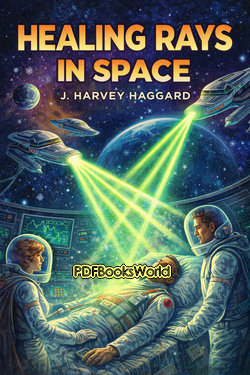
Healing Rays in Space
by J. Harvey Haggard
Medical Science and Hope Among the Stars
Healing Rays in Space by J. Harvey Haggard is an imaginative science fiction story exploring futuristic medicine, radiation technology, and humanity’s attempt to conquer disease and suffering through advanced scientific discovery. Written during the pulp science fiction era, the narrative combines speculative medical theory with space-age optimism while examining how science might transform health and survival beyond Earth.
Haggard presents technology not simply as mechanical progress, but as a force capable of improving human life and reshaping civilization itself.
The Discovery of Healing Rays
The story centers upon the development or discovery of mysterious healing rays possessing extraordinary medical properties. Scientists and physicians working within a futuristic or space-travel setting begin using advanced energy treatments capable of curing illness, repairing injury, or extending human endurance under dangerous conditions.
As experiments continue, excitement grows regarding the enormous possibilities offered by the new technology. However, uncertainty and danger also emerge as characters question the limits, risks, and ethical consequences of manipulating powerful scientific forces.
Rather than presenting science as completely safe or predictable, the narrative balances optimism with caution concerning humanity’s control over advanced discoveries.
Science, Health, and Human Survival
A major theme throughout the story is humanity’s desire to overcome physical weakness and disease through scientific progress. Haggard repeatedly explores how medical innovation may expand human potential while also creating new responsibilities and dangers.
The work also reflects early twentieth-century fascination with radiation, energy-based medicine, and futuristic health technologies during a period when scientific discoveries were rapidly transforming public understanding of medicine and physics.
At the same time, the story emphasizes compassion and the ethical use of scientific knowledge for the benefit of humanity.
This blend of speculative medicine and futuristic adventure gives the narrative much of its imaginative appeal.
Science Fiction Themes Explored Throughout the Story
- Futuristic Medicine: Advanced healing technologies promise new forms of treatment and recovery.
- Radiation and Scientific Discovery: Invisible energy becomes both useful and potentially dangerous.
- Human Survival in Space: Medical innovation supports exploration beyond Earth.
- Ethics and Scientific Responsibility: Powerful discoveries require moral restraint and wisdom.
- Optimism About Progress: Science is portrayed as a source of hope and transformation.
J. Harvey Haggard’s Speculative Style
Healing Rays in Space demonstrates J. Harvey Haggard’s ability to combine scientific curiosity with adventurous storytelling and futuristic imagination. His writing remains energetic, accessible, and strongly focused upon the exciting possibilities of medical and technological advancement.
Haggard consistently presents science fiction as both entertainment and a vision of future human achievement.
Why the Story Still Holds Science Fiction Interest
Modern readers continue finding Healing Rays in Space engaging because its themes of medical innovation, scientific ethics, radiation technology, and space survival remain highly relevant today. The story also captures the optimistic spirit and imaginative speculation associated with classic pulp-era science fiction.
For readers interested in futuristic medicine, space exploration, speculative technology, scientific adventure, and classic science fiction, this work remains imaginative, hopeful, and entertaining.
Similar Genres
About the Author

J. Harvey Haggard, known formally as John Harvey Haggard, was an American science fiction writer whose imaginative tales of space travel, alien worlds, and futuristic technology made him a notable contributor to the Golden Age of pulp science fiction. Explore J. Harvey Haggard books to discover the author's life, literary career, and access notable works, including Derelicts of Uranus, Task of Tau , and more.