
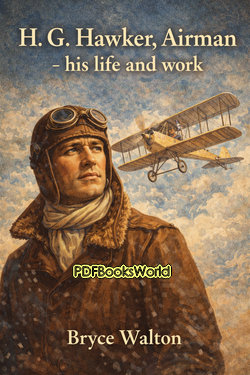
H. G. Hawker, airman - his life and work
by Muriel Hawker
Aviation Courage and the Rise of Early Flight
H. G. Hawker: airman - his life and work by Bryce Walton is a biographical account celebrating the achievements and adventurous life of Harry George Hawker, one of the pioneering aviators of the early twentieth century. The book explores Hawker’s contributions to aviation during a period when powered flight remained dangerous, experimental, and filled with uncertainty.
Walton presents Hawker as both a daring pilot and an important innovator whose skill and determination helped shape the development of modern aviation during its earliest and most dramatic years.
The Early Life of Harry Hawker
Born in Australia, Harry Hawker developed mechanical skills at a young age before traveling to England to pursue opportunities in aviation. His fascination with engines and machinery quickly evolved into a career connected with aircraft design, testing, and competitive flying.
The book describes Hawker’s rapid rise within the aviation world as he became associated with the Sopwith Aviation Company. Through courage and technical understanding, he earned recognition as one of the leading test pilots and aviation pioneers of his era.
Walton emphasizes the extraordinary risks faced by early aviators who flew fragile aircraft long before aviation safety became reliable or standardized.
Record Flights and Aviation Achievement
A major focus of the biography is Hawker’s remarkable flying career and his contribution to aircraft development before and after the First World War. He achieved fame through endurance flights, competitive aviation events, and experimental testing that pushed aircraft performance to new limits.
The work also discusses Hawker’s famous attempt to cross the Atlantic Ocean in 1919 with navigator Kenneth Mackenzie Grieve. Although mechanical problems forced them to abandon the flight, the daring attempt became one of the most celebrated aviation adventures of the period.
At the same time, the biography reflects the excitement surrounding aviation during an era when flight symbolized progress, courage, and technological possibility.
Historical Themes Explored Throughout the Biography
- Pioneering Aviation: Early pilots risked their lives advancing the science of flight.
- Mechanical Innovation: Aircraft design and engineering evolved rapidly during the early twentieth century.
- Courage and Endurance: Hawker’s career reflected bravery under dangerous conditions.
- Competition and Exploration: Record attempts and long-distance flights expanded aviation possibilities.
- The Growth of Modern Air Travel: Early experimental flight laid foundations for future aviation industries.
Bryce Walton’s Inspirational Narrative Style
H. G. Hawker: airman - his life and work demonstrates Bryce Walton’s energetic and admiring approach to historical biography. The writing remains clear, engaging, and strongly focused upon Hawker’s adventurous spirit and technical achievements.
Walton consistently presents aviation pioneers as individuals whose courage transformed transportation and modern technology.
Why the Book Still Holds Historical Interest
Modern readers continue finding H. G. Hawker: airman - his life and work valuable because it preserves the story of one of aviation’s important early pioneers during the formative years of flight. The book also provides insight into the dangers, ambitions, and excitement surrounding aviation before commercial air travel became common.
Its themes of exploration, technological progress, personal courage, and innovation continue appealing to readers interested in aviation history, biography, engineering, and early twentieth-century scientific achievement.
Similar Genres
About the Author
Muriel Hawker was an English biographer and writer best known for preserving the life and achievements of her husband, the celebrated aviator Harry George Hawker. Explore Muriel Hawker books to discover the author's life, literary career, and access notable works.