
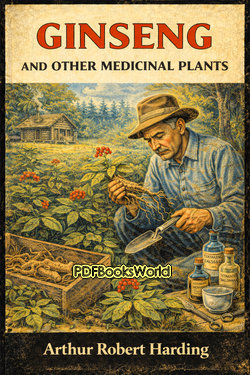
Ginseng and Other Medicinal Plants
by Arthur Robert Harding
The Growing Fascination With Natural Healing Plants
Ginseng and Other Medicinal Plants by Arthur Robert Harding explores the commercial, medicinal, and cultural importance of plants that were widely valued for their healing properties. The book focuses especially on ginseng, one of the most sought-after medicinal roots in herbal traditions, while also examining other useful plants gathered from forests and wild landscapes.
Written during a time when interest in natural remedies and plant collecting was rapidly increasing, the work combines practical information with discussions about trade, cultivation, and traditional uses. Harding presents medicinal plants not only as natural resources but also as valuable products connected to health and rural economies.
Why Ginseng Became So Valuable
Ginseng attracted enormous attention because of its reputation as a powerful medicinal root. For centuries, it was highly prized in Asian medicine and became an important export product from North America.
The book explains how collectors searched forests for wild ginseng and how growing demand increased its commercial value. Harding also discusses the difficulties involved in finding, harvesting, and preserving the plant.
The Connection Between Nature and Herbal Medicine
Beyond ginseng itself, the book introduces readers to a variety of medicinal plants traditionally used for healing purposes. Many rural communities relied on herbs, roots, and bark as affordable remedies before modern pharmaceutical products became widely available.
Harding describes how knowledge about these plants developed through observation and experience over many generations.
Important Topics Covered in the Book
- The harvesting and cultivation of ginseng
- Traditional uses of medicinal plants
- The trade and commercial value of herbal products
- Wild plant gathering in forests and rural areas
- The relationship between natural resources and healthcare
These subjects give the book both practical and historical significance.
A Practical Guide for Collectors and Growers
One of the book’s strengths is its practical focus. Harding provides information useful for people interested in locating, identifying, growing, and selling medicinal plants.
The work reflects a period when herbal products created economic opportunities for rural families and independent collectors. Readers can see how plant gathering became both a livelihood and a specialized skill.
The Historical Importance of Herbal Knowledge
Ginseng and Other Medicinal Plants also preserves traditional knowledge about natural remedies during a time of increasing scientific interest in botany and medicine. The book captures an era when herbal medicine still played a major role in everyday healthcare.
Although modern medical science has changed healthcare dramatically, many of the plants discussed in the book continue to attract scientific and commercial interest today.
Why the Book Continues to Interest Readers
Modern readers appreciate the book for its combination of botanical history, herbal tradition, and rural life. It offers insight into how people once depended on forests and natural landscapes for medicine and economic survival.
For readers interested in herbal medicine, natural history, or the history of plant trade, Ginseng and Other Medicinal Plants remains a fascinating exploration of the connection between nature, commerce, and healing.
Similar Genres
About the Author
Arthur Robert Harding was an American author, publisher, and outdoor enthusiast whose practical books on wildlife, trapping, farming, and medicinal plants became valuable resources for readers in the early twentieth century. He believed that knowledge gained through observation and experience should be shared in a clear and useful way. Explore Arthur Robert Harding books to discover the author's life, literary career, and access notable works.