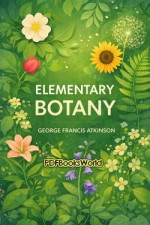
George Francis Atkinson
George Francis Atkinson was an American botanist, mycologist, educator, and university professor whose research and teaching made significant contributions to the study of plants and fungi. As a longtime professor at Cornell University, he helped shape botanical education in the United States by combining scientific research with clear and practical instruction. His publications introduced generations of students to the fundamentals of botany while advancing knowledge of plant biology, taxonomy, and the life cycles of fungi.
Atkinson believed that the study of plants should begin with careful observation of nature. He encouraged students to examine living specimens, understand plant structures, and appreciate the remarkable diversity of the plant kingdom. His teaching reflected a hands-on approach that emphasized scientific inquiry rather than memorization alone, making botanical science more engaging and accessible.
A Leader in Botanical Education
Throughout his academic career, Atkinson devoted himself to improving the teaching of botany. He wrote textbooks that explained complex scientific ideas in straightforward language, helping beginners build a strong foundation in plant science. His books combined accurate descriptions with detailed illustrations, making them valuable resources for both classroom instruction and independent study.
His influence extended well beyond teaching. Atkinson actively promoted the importance of botany in agriculture, forestry, and environmental understanding, demonstrating how plant science contributes to everyday life as well as scientific discovery.
Contributions to Mycology and Plant Science
In addition to his educational work, Atkinson became an internationally respected authority on fungi. His research covered mushroom classification, plant diseases, and fungal development, contributing to the growing scientific understanding of mycology during the late nineteenth and early twentieth centuries. His careful observations and published studies helped establish standards that influenced later botanical and mycological research.
By combining laboratory investigation with field observation, he demonstrated the importance of studying plants and fungi within their natural environments. His work continues to be recognized as an important part of the history of botanical science.
Notable Works
- Elementary Botany – An introductory textbook presenting the fundamentals of plant science.
- Mushrooms: Edible, Poisonous, etc. – A practical guide to identifying and understanding mushrooms.
- Studies of American Fungi – Research exploring the diversity and classification of fungi.
- Botany for High Schools – An educational text designed for beginning students of botany.
- The Development of the Mushrooms – A scientific study of fungal growth and life cycles.
An Enduring Scientific Legacy
George Francis Atkinson's contributions to botany and mycology continue to be appreciated by historians of science, educators, and students. His commitment to accurate observation, practical teaching, and scientific research helped establish botany as an accessible and engaging field of study. Through his textbooks and scholarly investigations, he inspired generations of learners to explore the diversity and importance of the plant world. Readers visiting PDF Books World can explore the works of George Francis Atkinson and discover classic writings that illuminate the fascinating science of plants, fungi, and the natural world.