
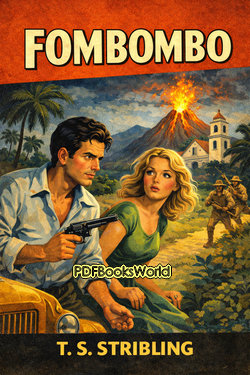
Fombombo
by T. S. Stribling
Political Satire, Revolution, and Comic Adventure in South America
Fombombo by T. S. Stribling is a lively satirical novel blending romance, political upheaval, humor, and adventure within the colorful setting of Venezuela. Published in 1923, the novel reflects Stribling’s fascination with Latin American society, revolutionary politics, and cultural contrast while combining comic storytelling with sharp social observation. The book became one of several lighter and more humorous works Stribling produced during the 1920s after establishing himself as a serious novelist.
Stribling presents Venezuela not simply as an exotic backdrop for adventure, but as a politically unstable world shaped by class conflict, ambition, military power, and theatrical personalities.
A Foreign Visitor in a Turbulent Land
The story follows an outsider drawn into the chaotic social and political environment surrounding the powerful and eccentric General Fombombo. As revolutions, personal rivalries, romantic entanglements, and shifting loyalties complicate events, the protagonist must navigate a society where appearances and political alliances change rapidly.
Much of the novel’s humor emerges from cultural misunderstandings, exaggerated personalities, and the absurdities of political life in a nation repeatedly shaken by coups, military authority, and unstable leadership.
Rather than portraying revolution as purely heroic or tragic, Stribling treats political conflict with irony and comic skepticism, emphasizing vanity, opportunism, and human foolishness alongside genuine danger.
The volume reflects early twentieth-century American fascination with Latin America while also satirizing broader human weaknesses found within politics and society everywhere.
Its tone combines wit, satire, romance, and adventurous energy.
Characters
- General Fombombo: A powerful and flamboyant military figure whose personality dominates the political atmosphere of the novel.
- The Foreign Protagonist: An outsider attempting to understand and survive the unpredictable world surrounding him.
- Political Rivals and Revolutionaries: Ambitious figures competing for influence, authority, and survival.
- Romantic Interests and Social Elites: Characters whose relationships complicate both politics and personal loyalty.
Humor and Political Instability
A major theme throughout the novel is the absurdity of political ambition and the theatrical nature of authoritarian power. Stribling repeatedly explores how revolutions and political movements may become entangled with ego, vanity, and personal rivalry rather than genuine idealism.
The work also reflects fascination with cultural difference and the outsider’s perspective when confronting unfamiliar customs and unstable political systems.
This mixture of comedy and political satire gives the novel much of its enduring charm.
Literary and Social Themes Explored Throughout the Novel
- Political Satire and Revolution: The novel humorously examines unstable governments and ambitious leaders.
- Cultural Contrast and Misunderstanding: Foreign perspectives create both comedy and tension.
- Romance and Social Intrigue: Personal relationships influence political and emotional conflict.
- Power and Vanity: Authority figures are portrayed with irony and comic exaggeration.
- Adventure and Survival: Political unrest creates danger, uncertainty, and dramatic action.
The novel stands as an entertaining blend of satire, travel atmosphere, and political comedy from the interwar period.
The Comedy of Human Ambition
One of the work’s strongest ideas is that political systems often reflect ordinary human weaknesses rather than grand heroic ideals. Stribling repeatedly demonstrates how pride, greed, romance, and personal ambition shape historical events as strongly as ideology or patriotism.
The novel also reveals the author’s gift for exposing social absurdity through humor rather than direct moral preaching.
This balance between amusement and observation gives the narrative lasting literary appeal.
T. S. Stribling’s Satirical Narrative Style
Fombombo demonstrates T. S. Stribling’s ability to combine comic dialogue, fast-moving situations, and sharp social commentary into lively popular fiction. Stribling later became widely known for his socially critical Southern novels and won the Pulitzer Prize for The Store in 1933.
The writing remains energetic, humorous, and strongly focused upon revealing the contradictions and theatricality of political and social behavior.
Why the Novel Still Holds Literary Interest
Modern readers continue finding Fombombo enjoyable because it combines political satire, romance, and exotic adventure within an entertaining and humorous narrative.
The novel also provides insight into early twentieth-century American views of Latin America and the popularity of satirical political fiction during the period.
Its themes of ambition, instability, romance, and cultural misunderstanding continue appealing to readers interested in witty adventure stories and social satire.
For readers interested in political comedy, Latin American settings, satirical fiction, interwar literature, adventurous romance, and T. S. Stribling’s literary career, this work remains lively, amusing, and sharply observant.
Similar Genres
About the Author
T. S. Stribling, formally Thomas Sigismund Stribling, was an American novelist, lawyer, and short story writer whose fiction explored social change, human psychology, and the complexities of American life. Explore T. S. Stribling books to discover the author's life, literary career, and access notable works.