
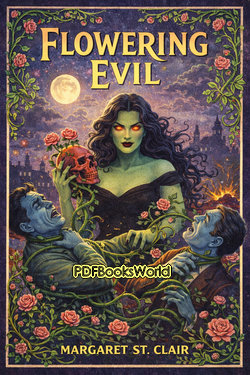
Flowering Evil
by Margaret St. Clair
Alien Influence and Psychological Horror in a Quiet Community
Flowering Evil by Margaret St. Clair is a disturbing science fiction story blending psychological suspense, alien mystery, and subtle horror within an apparently ordinary setting. Written during the golden age of speculative fiction, the story explores how strange external forces may quietly invade human life, altering emotions, behavior, and social stability beneath the surface of normal existence.
St. Clair presents evil not as obvious violence alone, but as something capable of growing silently and naturally, much like a poisonous flower spreading unnoticed through a peaceful environment.
A Strange Presence Begins to Spread
The story unfolds as unusual events and unsettling behavioral changes begin appearing within a community touched by mysterious and possibly extraterrestrial influence. At first, the disturbances seem small or easily ignored, but growing unease gradually reveals that something dangerous is taking root beneath ordinary reality.
As suspicion and fear increase, characters struggle to understand whether the threat is psychological, biological, or alien in origin. The uncertainty surrounding the true nature of the danger creates a constant atmosphere of tension and paranoia.
Rather than relying upon large-scale destruction, the narrative creates horror through quiet transformation and emotional instability.
Characters
- The Investigator or Observer: A character attempting to understand the strange changes affecting the community.
- The Infected or Influenced Individuals: People gradually altered by mysterious external forces.
- Suspicious Authorities or Neighbors: Figures reacting with fear, denial, or confusion.
- The Unknown Presence: A hidden force connected with the spreading danger.
Fear Hidden Beneath Ordinary Life
A major theme throughout the story is the fragility of normal society when confronted with unseen corruption or influence. St. Clair repeatedly explores how fear grows when people can no longer trust familiar surroundings or even their own perceptions.
The work also reflects Cold War-era anxieties concerning hidden invasion, psychological manipulation, and loss of personal identity. The quiet spread of danger mirrors fears of unseen ideological or biological contamination common during the mid-twentieth century.
This mixture of science fiction and psychological horror gives the narrative much of its unsettling power.
Science Fiction Themes Explored Throughout the Story
- Alien or Unnatural Influence: Mysterious forces quietly alter human behavior and society.
- Psychological Fear and Paranoia: Characters struggle against uncertainty and mistrust.
- The Corruption of Ordinary Life: Familiar environments become sources of danger.
- Loss of Identity and Control: Individuals fear transformation and manipulation.
- Hidden Threats Within Society: Evil spreads gradually rather than through open attack.
Margaret St. Clair’s Atmospheric Style
Flowering Evil demonstrates Margaret St. Clair’s talent for combining speculative ideas with psychological unease and emotional tension. Her writing remains subtle, suspenseful, and strongly focused upon atmosphere rather than spectacle.
St. Clair consistently creates fear through suggestion, ambiguity, and the quiet collapse of normality.
Why the Story Still Holds Science Fiction Interest
Modern readers continue finding Flowering Evil compelling because its themes of hidden influence, paranoia, and psychological instability remain highly effective and relevant. The story also reflects the sophisticated blend of science fiction and horror that became increasingly popular during the mid-twentieth century.
For readers interested in psychological science fiction, alien invasion themes, speculative horror, Cold War anxieties, and atmospheric pulp fiction, this work remains eerie, intelligent, and emotionally unsettling.
Similar Genres
About the Author
Margaret St. Clair was an American science fiction and fantasy writer whose imaginative stories explored the boundaries between reality, psychology, spirituality, and the unknown. Writing during the golden age of speculative fiction, she became one of the few prominent women authors in the genre, creating original tales that blended scientific ideas with elements of mystery and fantasy. St. Explore Margaret St. Clair books to discover the author's life, literary career, and access notable works.