
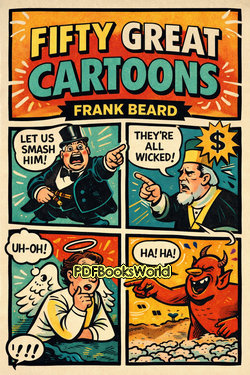
Fifty Great Cartoons
by Frank Beard
When Art and Humor Become Powerful Social Commentary
Fifty Great Cartoons by Frank Beard is a fascinating collection that showcases the impact of political and social cartoons as a form of communication. Through a selection of memorable illustrations, Beard demonstrates how artists can use humor, symbolism, and satire to comment on important issues of their time. More than simple entertainment, the cartoons featured in this work reveal public attitudes, political debates, and social concerns that shaped history.
The Power of the Cartoon
Cartoons have long been an effective way to communicate complex ideas in a simple and engaging manner. A single image can capture public opinion, criticize authority, or highlight social problems more quickly than a lengthy article. In this collection, Beard explores examples that illustrate the unique ability of cartoonists to influence discussion and encourage reflection.
What Makes a Great Cartoon?
According to the principles reflected in the collection, great cartoons combine artistic skill with a clear message. They use visual symbols, exaggerated features, and clever ideas to make their point. Even when created for specific historical events, many of these works remain understandable because they address universal themes such as power, justice, and human behavior.
Common Features Found in the Collection
- Satire: Humor is used to expose weaknesses, mistakes, or contradictions.
- Symbolism: Objects and figures often represent larger ideas or institutions.
- Political Commentary: Many cartoons address government actions and public policy.
- Social Observation: Everyday issues and cultural trends become subjects for artistic critique.
A Window into History
One of the most valuable aspects of the book is its historical significance. The cartoons reflect the concerns, controversies, and debates of the periods in which they were created. By studying them, readers gain insight into how people viewed major events and public figures. The collection serves as both an artistic showcase and a record of changing social attitudes.
Key Themes Explored
- Freedom of Expression: Cartoons provide a platform for opinions and criticism.
- Political Accountability: Public officials and institutions are often examined through satire.
- Social Change: Artists highlight issues affecting communities and society.
- Humor and Criticism: Entertainment and serious commentary work together.
- Public Opinion: Cartoons reflect and influence the views of their audiences.
Frank Beard’s Contribution
Frank Beard was known not only as an artist but also as an observer of social and political life. In this collection, he demonstrates an appreciation for the role cartoons play in public discourse. By bringing together notable examples, he highlights the creativity and influence of cartoonists who used their talents to engage with important issues.
Why the Collection Remains Interesting Today
Fifty Great Cartoons continues to appeal to readers interested in art, history, and communication. The collection shows how visual storytelling can shape opinions and spark discussion. Even in an age dominated by digital media, the lessons found in these cartoons remain relevant, reminding readers that a well-crafted image can sometimes say more than pages of text.
Similar Genres
About the Author
Frank Beard was an American illustrator, cartoonist, lecturer, and author whose political and social cartoons earned him widespread recognition during the late nineteenth century. Through his expressive illustrations and sharp visual commentary, Beard addressed public issues, everyday life, and national events with humor and insight. Explore Frank Beard books to discover the author's life, literary career, and access notable works.