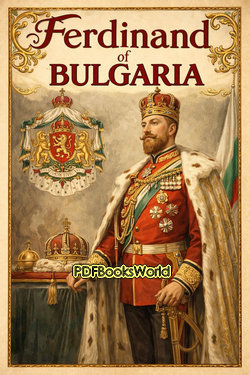
Ferdinand of Bulgaria
by Anonymous
The Controversial Monarch Who Guided Bulgaria Through Turbulent European Politics
Diplomacy, royal ambition, military conflict, and political intrigue surround the complex figure at the center of Ferdinand of Bulgaria by Anonymous. The work examines the life and reign of Ferdinand I, ruler of Bulgaria during a period marked by nationalism, shifting alliances, imperial rivalry, and the growing instability that eventually contributed to major European wars.
Part political portrait and part historical commentary, the book reflects fascination with monarchy and international power during the late nineteenth and early twentieth centuries.
A Prince in a Divided Europe
Ferdinand assumed leadership of Bulgaria at a time when the Balkans were among Europe’s most politically volatile regions. Newly emerging national identities, weakening empires, and competing foreign powers created constant instability.
Bulgaria itself sought greater independence, territorial expansion, and recognition among European nations.
Ferdinand’s rule therefore unfolded within an environment where diplomacy and military strategy became deeply interconnected.
The Personality of Ferdinand
Historical portrayals of Ferdinand often describe him as intelligent, ambitious, cultured, and politically calculating.
The book explores characteristics that made him both admired and controversial:
- Strong personal ambition
- Interest in royal prestige and ceremony
- Complex diplomatic maneuvering
- Willingness to pursue risky political goals
These qualities shaped both Bulgaria’s successes and its later difficulties.
The Balkans as a Political Battleground
One of the work’s major themes is the instability of Balkan politics during the era.
The region became a center of competing interests involving:
- The declining Ottoman Empire
- Russian influence in Eastern Europe
- Austro-Hungarian political ambitions
- Rising nationalist movements
Ferdinand’s Bulgaria operated within this dangerous network of alliances and rivalries.
The political atmosphere often seemed unpredictable and explosive.
War, Expansion, and Consequence
The narrative also addresses Bulgaria’s involvement in regional conflicts and broader European wars.
Territorial ambition and shifting alliances repeatedly altered Bulgaria’s position on the international stage.
Military campaigns brought moments of triumph but also eventual political and national hardship.
The book reflects how quickly royal ambition and nationalist dreams could become entangled with catastrophe during the early twentieth century.
The Style and Tone of the Work
As with many political biographies and historical commentaries of its era, the book combines factual reporting with opinionated interpretation.
The tone may at times appear admiring, critical, or dramatic depending on the subject under discussion.
Descriptions of diplomacy, royal behavior, and military events help create a vivid portrait of European political life before and during major conflict.
Why Ferdinand of Bulgaria Still Holds Historical Interest
Ferdinand of Bulgaria remains valuable because the Balkans played a crucial role in shaping modern European history. Understanding figures like Ferdinand helps illuminate the political tensions and ambitions that influenced the continent during a period of enormous upheaval.
For readers interested in royal biography, Balkan history, European diplomacy, nationalism, and pre-World War politics, the book offers a revealing portrait of a monarch navigating one of Europe’s most unstable political landscapes.