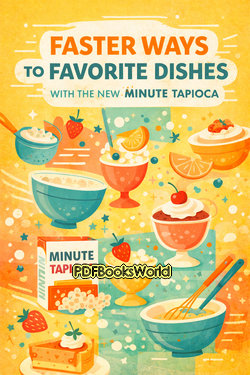
Faster Ways to Favorite Dishes With the New Minute Tapioca
by Anonymous
A Snapshot of Mid-Century Convenience Cooking
Faster Ways to Favorite Dishes With the New Minute Tapioca is a promotional recipe booklet that reflects the growing popularity of convenience foods in twentieth-century American kitchens. Produced during an era when manufacturers sought to simplify meal preparation, the publication demonstrates how new food products were marketed as time-saving solutions for busy households.
Rather than functioning as a traditional cookbook, the booklet serves a dual purpose. It introduces readers to Minute Tapioca while providing practical recipes designed to showcase the product's versatility. Through desserts, fillings, puddings, and other dishes, it illustrates how modern ingredients could reduce preparation time without sacrificing flavor or consistency.
Today, the booklet offers more than culinary instructions. It provides a fascinating glimpse into changing attitudes toward cooking, technology, and domestic life.
The Rise of Convenience Foods
The decades following the Second World War saw significant changes in household routines. Advances in food processing and packaging encouraged companies to develop products that required less preparation and fewer ingredients.
Consumers increasingly valued:
- Reduced cooking time.
- Reliable and consistent results.
- Easy-to-follow recipes.
- Versatile ingredients suitable for multiple dishes.
Minute Tapioca was promoted as part of this broader movement, offering cooks a quick thickening and dessert-making ingredient that could be incorporated into numerous recipes.
What Made Minute Tapioca Popular?
Tapioca had long been used in puddings and pie fillings, but traditional preparation methods could require additional time and effort. The "Minute" version was designed to streamline the process, appealing to households seeking efficiency.
The booklet emphasizes how the product could be used in both familiar and creative ways. By presenting multiple recipes, it encourages readers to view the ingredient not as a specialty item but as a regular kitchen staple.
This marketing strategy was common among food companies of the period, which often distributed recipe booklets to inspire consumer confidence and experimentation.
The Character of the Recipes
The recipes featured in the booklet likely focus on dishes that were especially popular in American homes during the mid-twentieth century. Many would have been designed to balance simplicity with presentation, making them suitable for both family meals and social gatherings.
Common recipe categories may include:
Desserts: Puddings, custards, fruit-based sweets, and chilled treats.
Pie Fillings: Fruit pies and baked desserts requiring dependable thickening.
Household Favorites: Adaptations of familiar recipes made quicker through the use of prepared ingredients.
The emphasis throughout is practicality and ease of preparation.
A Reflection of Domestic Culture
Beyond its culinary value, the booklet reflects changing ideas about household management. Advertisers increasingly portrayed modern kitchens as spaces where technology and innovation could reduce labor and create more leisure time.
Recipe collections associated with branded products often promised convenience while maintaining traditional standards of home cooking. They reassured consumers that adopting new methods did not mean abandoning familiar flavors or family traditions.
As a result, publications like this became important cultural artifacts documenting everyday life and consumer habits.
Why It Remains Interesting Today
Faster Ways to Favorite Dishes With the New Minute Tapioca continues to attract interest from food historians, collectors, and vintage recipe enthusiasts. The booklet preserves examples of period advertising, culinary trends, and domestic expectations that shaped American kitchens for decades.
Modern readers may also discover recipes that remain surprisingly practical and enjoyable, demonstrating how certain cooking techniques endure even as ingredients and technologies evolve.
Final Thoughts
Faster Ways to Favorite Dishes With the New Minute Tapioca is more than a promotional cookbook. It is a small but revealing record of a time when convenience foods transformed home cooking and manufacturers actively shaped culinary habits through recipe-based marketing. Combining practicality, advertising, and everyday food culture, the booklet remains an engaging example of mid-century American kitchen history.