
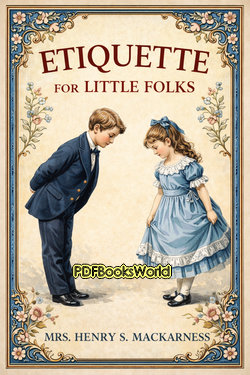
Etiquette for Little Folks
by Mrs. Henry S. Mackarness
Teaching Courtesy and Good Manners to Young Readers
Etiquette for Little Folks by Mrs. Henry S. Mackarness is a charming guide designed to introduce children to the principles of good behavior, courtesy, and social responsibility. Written during the Victorian era, the book reflects a time when manners were considered an essential part of a child's education. Through practical advice and gentle instruction, it seeks to help young readers develop habits that promote kindness, respect, and consideration for others.
Rather than focusing solely on formal rules, the work emphasizes the importance of thoughtful behavior in everyday life. Its lessons are intended to prepare children for positive interactions at home, in school, and within the broader community.
The Purpose of Etiquette
Etiquette is often associated with social customs and polite behavior, but the book presents it as something more meaningful. Good manners are portrayed as expressions of respect and kindness rather than mere adherence to rules.
By encouraging children to think about the feelings and needs of others, the author connects courtesy with character development and personal responsibility.
Lessons for Everyday Life
The book addresses situations that children are likely to encounter in their daily routines. Interactions with family members, teachers, friends, and guests provide opportunities to practice politeness and consideration.
Through these examples, young readers learn how small acts of courtesy can contribute to more pleasant and harmonious relationships.
Major Themes Found Throughout the Book
- Courtesy: Treating others with kindness and respect.
- Responsibility: Understanding the impact of one's behavior.
- Self-Discipline: Developing habits of good conduct.
- Consideration: Being attentive to the needs and feelings of others.
These themes form the foundation of the book's educational message.
Manners at Home
The home is presented as the first and most important place for learning proper behavior. Children are encouraged to show respect to parents, siblings, and other family members through thoughtful actions and courteous speech.
The author suggests that habits developed at home often influence behavior in other settings throughout life.
Conduct in Society
As children interact with people beyond their immediate families, they encounter situations that require tact and good judgment. The book offers guidance on visiting friends, receiving guests, participating in conversations, and behaving appropriately in public.
These lessons aim to help young readers feel confident and considerate in social situations.
A Reflection of Victorian Values
Etiquette for Little Folks provides insight into the educational and social ideals of the Victorian period. While some specific customs may seem dated, many of the underlying principles remain familiar. Respect, honesty, kindness, and consideration continue to be valued qualities in communities around the world.
As a historical document, the book offers a glimpse into how character education was approached in the nineteenth century.
Why Readers Continue to Appreciate the Book
- Timeless Lessons: Encouragement of kindness and respect.
- Historical Interest: Insight into Victorian childhood education.
- Practical Advice: Guidance for everyday social situations.
- Character Development: Emphasis on responsibility and consideration.
Why Etiquette for Little Folks Remains Worth Reading
Etiquette for Little Folks is a thoughtful and engaging guide to the principles of good manners and considerate behavior. Through its practical advice and emphasis on character, Mrs. Henry S. Mackarness encourages young readers to develop habits that strengthen relationships and contribute to a respectful society. The book remains an interesting blend of historical insight and timeless wisdom about treating others with courtesy and care.
Similar Genres
About the Author
Mrs. Henry S. Mackarness was a British author and educator whose writings focused on the moral and social development of children. She believed that good manners, kindness, and thoughtful behavior were essential parts of a child's education, complementing academic learning and personal growth. Explore Mrs. Henry S. Mackarness books to discover the author's life, literary career, and access notable works.