
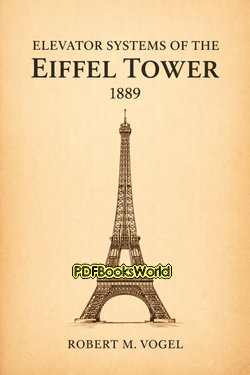
Elevator Systems of the Eiffel Tower, 1889
by Robert M. Vogel
The Engineering Genius Behind a World Icon
When the Eiffel Tower was unveiled in 1889, it amazed the world not only because of its height and striking design but also because of the advanced engineering hidden inside the structure. Elevator Systems of the Eiffel Tower, 1889 explores the remarkable technology that allowed visitors to travel safely and efficiently through one of the tallest structures ever built at the time.
The book highlights how innovative elevator engineering became essential to the success of the tower, transforming it from a daring architectural experiment into a practical and accessible landmark.
The Engineering Challenge of the Eiffel Tower
Designing elevators for the Eiffel Tower presented enormous technical difficulties. The curved shape of the tower’s legs and the extreme height required engineers to create entirely new mechanical solutions unlike traditional vertical elevator systems used in ordinary buildings.
Engineers had to solve problems involving balance, safety, hydraulic power, and passenger transport while working within the tower’s unusual structure.
Key Engineering Topics Explored in the Book
- The design of the Eiffel Tower elevator systems
- Hydraulic engineering and mechanical innovation
- The challenges of transporting passengers safely
- Nineteenth-century industrial technology
- The relationship between architecture and engineering
Innovation During the Industrial Age
The late nineteenth century was a period of rapid technological progress, and the Eiffel Tower became a symbol of modern engineering achievement. The elevator systems represented the growing confidence of industrial society in machinery, steel construction, and scientific advancement.
At the time, many people doubted whether such a tall structure could operate safely for public use, making the success of the elevators even more impressive.
Major Themes Found Throughout the Work
- Human innovation and technological progress
- The growth of modern urban engineering
- The importance of safety and mechanical precision
- The influence of industrialization on architecture
- The connection between design and functionality
Why the Eiffel Tower Still Fascinates the World
The Eiffel Tower remains one of the most recognizable landmarks in the world because it represents both artistic beauty and engineering ambition. While visitors often admire its appearance, the hidden mechanical systems inside the structure are equally important to its historical significance.
The elevator technology demonstrated how engineering innovation could support ambitious architectural design on an unprecedented scale.
Readers interested in engineering history often explore the history and construction of the Eiffel Tower to better understand the technological achievements behind the famous monument.
The Importance of Elevator Technology in Modern Architecture
The development of reliable elevator systems transformed cities by making skyscrapers and tall structures practical for public and commercial use. Innovations connected to the Eiffel Tower helped demonstrate the future potential of vertical transportation technology.
Without elevators, modern urban architecture would look dramatically different today.
Reasons the Book Continues to Hold Interest
- Explains groundbreaking nineteenth-century engineering
- Highlights the hidden technology of the Eiffel Tower
- Offers insight into industrial innovation
- Appeals to architecture and engineering enthusiasts
- Connects historical invention with modern technology
The Lasting Legacy of Industrial Engineering
The engineering achievements of the nineteenth century continue influencing modern construction, transportation, and urban development. The Eiffel Tower’s elevators demonstrated how creative problem-solving and mechanical innovation could overcome seemingly impossible challenges.
Books like Elevator Systems of the Eiffel Tower, 1889 preserve the fascinating history behind these technological breakthroughs.
Final Thoughts
Elevator Systems of the Eiffel Tower, 1889 remains a fascinating exploration of engineering innovation and industrial achievement. Through detailed examination of the tower’s revolutionary elevator technology, the work reveals the hidden mechanical brilliance behind one of the world’s most famous landmarks. Its lasting historical and technological importance continues to inspire readers interested in architecture, machinery, and the history of modern engineering.
Similar Genres
About the Author
Robert M. Vogel was an American historian, curator, and author whose work significantly advanced the study of engineering and industrial history. Throughout his distinguished career, he explored the technological achievements that shaped the modern world, documenting innovations in transportation, architecture, machinery, and manufacturing. Explore Robert M. Vogel books to discover the author's life, literary career, and access notable works.