Edward Sylvester Morse
Edward Sylvester Morse (1838–1925) was an American zoologist, archaeologist, orientalist, and author whose remarkable career spanned several scientific disciplines. Best known for his pioneering studies of brachiopods and for introducing modern archaeological methods to Japan, Morse combined careful observation with an enduring curiosity about the natural world and human civilization. His interests extended beyond biology and archaeology to astronomy, art, and cultural history, allowing him to write for both scholars and general readers with equal enthusiasm. Through his lectures and publications, he encouraged scientific inquiry and inspired a wider appreciation of the wonders of nature and the universe.
A Scholar of Many Interests
Morse believed that scientific knowledge should be shared in a way that was engaging and accessible. His research took him across continents, where he investigated marine life, ancient settlements, Japanese culture, and astronomical observations. Rather than limiting himself to a single field, he explored how careful observation could deepen humanity's understanding of both Earth and the cosmos. His ability to connect diverse subjects made him one of the most versatile scientific writers of his generation, earning recognition for his contributions to natural history as well as archaeology.
Writing Style
Edward Sylvester Morse wrote with clarity, curiosity, and an evident enthusiasm for discovery. He presented scientific ideas in language that welcomed readers without specialized knowledge while maintaining a high standard of accuracy and thoughtful analysis. His books often blended historical context, personal observations, and scientific evidence, making even complex topics approachable and enjoyable. This balanced style has helped his writings remain valuable to readers interested in the history of science and exploration.
Essential Works
- Mars and its Mystery – Examines contemporary theories about the planet Mars, its surface features, and the possibility of intelligent life.
- Japanese Homes and Their Surroundings – Explores traditional Japanese architecture, domestic life, and cultural customs through detailed observations.
- Glimpses of China and Chinese Homes – Describes Chinese society, architecture, and everyday life from the author's firsthand experiences.
- First Book of Zoology – Introduces fundamental principles of zoology through clear explanations and practical examples.
- Catalogue of the Mollusca of Maine – Documents the marine mollusks of Maine and reflects Morse's early contributions to zoological research.
Featured Title from Our Collection
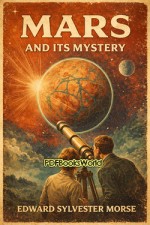
Mars and its Mystery explores one of the most fascinating scientific questions of the early twentieth century: the true nature of the planet Mars. Drawing upon the astronomical observations and scientific debates of his era, Morse examines the evidence surrounding the planet's surface markings, seasonal changes, and the widely discussed theory of artificial canals. Rather than presenting sensational claims, he carefully evaluates competing ideas and encourages readers to appreciate the importance of scientific observation in understanding our neighboring world. The book offers a valuable historical perspective on the evolution of planetary science before the age of space exploration.
Legacy
Edward Sylvester Morse left an enduring legacy through his pioneering work in zoology, archaeology, and cultural studies, demonstrating how curiosity and careful research could bridge multiple fields of knowledge. His writings continue to provide insight into the scientific thinking of his time while preserving valuable observations on nature, history, and society. PDF Books World has carefully curated digital editions of his notable works, enabling modern readers to rediscover the achievements of a scholar whose passion for learning crossed disciplinary boundaries and inspired generations of researchers and enthusiasts.