Edward Everett
Edward Everett was an American statesman, educator, diplomat, scholar, and celebrated public speaker whose influence extended far beyond politics. A graduate and later president of Harvard University, Everett devoted his life to education, public service, and the promotion of knowledge. He believed that science, literature, and the humanities should work together to enrich society and cultivate informed citizens. His eloquent lectures and essays introduced complex subjects to broad audiences, making learning both engaging and meaningful. Through his dedication to scholarship and public education, Everett became one of the most respected intellectual figures of nineteenth-century America.
A Champion of Learning and Public Education
Everett held many distinguished positions during his career, including professor, governor, ambassador, U.S. senator, and Secretary of State. Despite these demanding roles, he remained deeply committed to education and lifelong learning. His public lectures attracted large audiences because he possessed an exceptional ability to explain historical, scientific, and cultural subjects with clarity and enthusiasm. He believed that knowledge should not remain confined to academic institutions but should be shared with society as a whole.
His writings reflected a broad intellectual curiosity that embraced history, literature, science, and public affairs. This wide range of interests allowed him to present ideas in a way that appealed to readers from many different backgrounds.
Bringing Science to the General Reader
Although Everett was not a professional astronomer, he appreciated astronomy as one of humanity's greatest intellectual achievements. He regarded the study of the heavens as a subject that encouraged curiosity, careful observation, and a deeper understanding of the natural world. His thoughtful discussions highlighted not only the scientific importance of astronomy but also its influence on navigation, timekeeping, civilization, and philosophical thought. By connecting scientific knowledge with everyday life, he helped readers recognize the broader value of astronomical discovery.
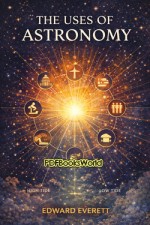
Among his well-known essays is The Uses of Astronomy, in which he explains how astronomical knowledge has benefited humanity while inspiring wonder about the universe. The work reflects his gift for combining scientific appreciation with eloquent public discourse.
Notable Works
- The Uses of Astronomy – Explores the practical, historical, and intellectual importance of astronomy in human civilization.
- Orations and Speeches – A collection of public addresses on education, history, patriotism, and national affairs.
- The Life of George Washington – A biographical study celebrating the leadership and legacy of America's first president.
- Mount Vernon Papers – Essays discussing American history, civic responsibility, and national heritage.
- The Importance of Practical Education – Examines the value of education in shaping informed citizens and strengthening society.
An Enduring Legacy of Scholarship
Edward Everett demonstrated that education flourishes when knowledge is shared with clarity, enthusiasm, and purpose. His lectures and writings inspired readers to appreciate history, science, literature, and public life as interconnected fields of learning. His commitment to intellectual excellence continues to make his work valuable for readers interested in education, public speaking, and the history of ideas.
Readers visiting PDF Books World can explore the works of Edward Everett and discover thoughtful writings that celebrate education, scientific curiosity, and the enduring pursuit of knowledge.