
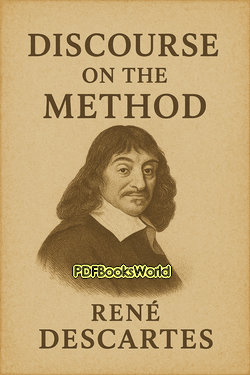
Discourse on the Method
by Rene Descartes
A Revolutionary Philosophical Work About Reason, Knowledge, and Human Thought
Discourse on the Method by René Descartes is one of the most influential philosophical works in modern intellectual history. First published in 1637, the book presents Descartes’s ideas about reason, scientific thinking, and the search for truth through logical analysis and careful doubt.
The work became highly important because it introduced a new approach to philosophy and scientific inquiry. Descartes argued that people should question assumptions and rely on clear reasoning rather than tradition or unquestioned authority. His ideas strongly influenced the development of modern rationalist philosophy and scientific thought.
About the Author
René Descartes was a French philosopher, mathematician, and scientist often called the “Father of Modern Philosophy.” His writings transformed European philosophy by emphasizing logic, mathematics, and systematic doubt as tools for discovering truth.
Descartes also made major contributions to mathematics and science, including the development of Cartesian geometry. His intellectual methods influenced generations of philosophers, scientists, and thinkers.
Main Themes of the Book
The book explains Descartes’s method for reaching reliable knowledge by questioning beliefs that could possibly be false. He believed that truth should be based on reason and certainty rather than tradition or opinion.
Important Themes Discussed
- The importance of reason and logic
- Doubt as a path to knowledge
- The relationship between mind and reality
- The search for certainty and truth
Descartes encourages readers to think independently and carefully examine their beliefs before accepting them as true.
The Famous Method of Doubt
One of the most famous ideas in the book is Descartes’s “method of doubt.” He temporarily questions everything that can be doubted in order to discover what can be known with complete certainty.
This process leads to his famous conclusion, “I think, therefore I am,” which became one of the foundational ideas of modern philosophy. Descartes argues that the act of thinking itself proves the existence of the thinker.
What Makes the Work Unique
- Systematic use of logical doubt
- Strong influence on modern philosophy and science
- Clear and methodical philosophical reasoning
Writing Style
Descartes’s writing style is logical, direct, and reflective. Unlike many philosophical works of his time, the book is written in a personal and accessible manner, allowing readers to follow his thought process step by step.
The combination of autobiography, philosophy, and scientific reasoning helped make the work both influential and widely readable.
Historical Importance
Discourse on the Method became one of the foundational texts of modern Western philosophy. Its emphasis on reason and independent inquiry contributed greatly to the Scientific Revolution and Enlightenment thought.
Historical Features
- Foundation of modern rationalist philosophy
- Influence on scientific reasoning and inquiry
- Development of systematic philosophical methods
The work also marked a shift away from relying entirely on traditional authority toward greater emphasis on human reasoning and observation.
Lessons for Modern Readers
Modern readers continue to study the book because its ideas about critical thinking, reasoning, and intellectual independence remain highly relevant today. Descartes’s approach encourages people to question assumptions and seek evidence before accepting beliefs.
The work also demonstrates how logic and careful analysis can help individuals better understand themselves and the world around them.
Conclusion
Discourse on the Method by René Descartes remains a landmark work of philosophy and intellectual history. Through logical reasoning and the method of doubt, Descartes created a powerful framework for modern thought that continues to influence philosophy, science, and critical thinking today.
Similar Genres
About the Author
René Descartes was a French philosopher, mathematician, and scientist whose ideas transformed the development of modern philosophy and rational inquiry. Widely regarded as the "Father of Modern Philosophy," he sought to establish knowledge on the firm foundation of reason and systematic doubt. Explore Rene Descartes books to discover the author's life, literary career, and access notable works.