
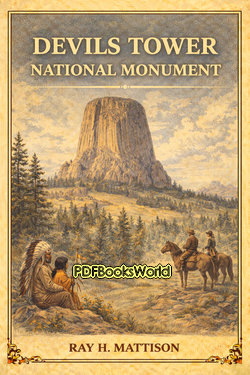
Devils Tower National Monument: A History
by Ray H. Mattison
The Story of America's First National Monument
Devils Tower National Monument: A History by Ray H. Mattison chronicles the history of one of the most distinctive natural landmarks in the United States. Rising dramatically above the surrounding plains of northeastern Wyoming, Devils Tower has long inspired wonder, curiosity, and cultural significance. Mattison's work explores not only the geological uniqueness of the formation but also its place in Native American traditions, frontier history, conservation efforts, and the development of the National Park Service.
The book presents Devils Tower as more than an unusual rock formation. It is a site where natural history, cultural heritage, and public preservation intersect, making it one of the most important landmarks in the American West.
A Landmark Unlike Any Other
Devils Tower stands hundreds of feet above the surrounding landscape, its vertical columns creating a striking appearance that has fascinated visitors for generations. Long before scientists attempted to explain its origins, the formation inspired stories, legends, and spiritual traditions among Indigenous peoples of the region.
Mattison examines how different groups viewed the landmark over time. Native communities regarded the site with deep cultural and religious significance, while later explorers and settlers often saw it as a natural curiosity and symbol of the western frontier.
The monument's remarkable appearance ensured that it would become one of the most recognizable natural features in North America.
Native American Connections
An important aspect of the book is its attention to the longstanding relationship between Indigenous peoples and Devils Tower. Numerous tribes have traditions and stories connected to the formation, viewing it as a sacred place within their cultural heritage.
These traditions provide perspectives that extend far beyond scientific explanations of the monument's origins. Mattison highlights the importance of understanding Devils Tower not merely as a geological feature but also as a place of enduring spiritual and historical meaning.
This cultural dimension adds depth to the monument's story and helps explain its continuing significance.
The Path to Preservation
One of the central themes of the book is the effort to protect the site for future generations. During the late nineteenth and early twentieth centuries, growing public interest in conservation led to increased recognition of America's unique natural landmarks.
Several developments contributed to the monument's preservation:
- Growing appreciation of natural wonders.
- Scientific interest in unusual geological formations.
- Public support for conservation initiatives.
- Federal efforts to protect significant sites.
These factors culminated in Devils Tower becoming the first national monument in the United States, marking a milestone in American conservation history.
The Role of Theodore Roosevelt's Conservation Policies
The creation of the monument reflected a broader national movement toward preserving important natural and historical resources. The early twentieth century witnessed increased efforts to safeguard landscapes that might otherwise have been altered or damaged by development.
Mattison places Devils Tower within this wider conservation movement, showing how the monument became part of a growing network of protected areas. Its designation demonstrated a belief that exceptional natural features should be preserved not only for scientific study but also for public enjoyment and inspiration.
This decision helped shape future preservation efforts throughout the country.
A Historical Resource for Modern Readers
Beyond recounting events, the book illustrates how attitudes toward nature have evolved over time. Readers gain insight into changing ideas about exploration, conservation, tourism, and cultural heritage. The monument's history reflects broader developments in American society and its relationship with the natural environment.
Mattison's work also highlights the importance of balancing public access with preservation, a challenge that continues to influence the management of protected sites today.
Final Thoughts
Devils Tower National Monument: A History by Ray H. Mattison offers an informative account of one of America's most iconic landmarks. By examining its geological significance, cultural traditions, historical development, and preservation, the book reveals why Devils Tower occupies such a special place in the nation's heritage.
For readers interested in American history, conservation, national parks, Indigenous traditions, and the natural wonders of the American West, this work provides a thoughtful and engaging exploration of a landmark that continues to inspire visitors from around the world.
Similar Genres
About the Author
Ray H. Mattison was an American historian, researcher, and writer whose work focused on preserving the history of the American West and the nation's historic landmarks. Through careful research and clear historical writing, he documented the stories behind important places, helping readers understand how natural landscapes and historic sites became part of the United States' cultural heritage. Explore Ray H. Mattison books to discover the author's life, literary career, and access notable works.