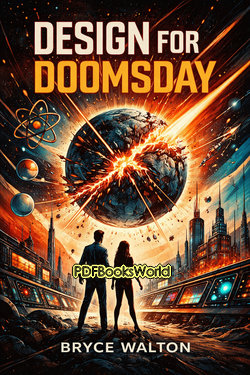
Design For Doomsday
by Bryce Walton
Martian Tyranny, Interplanetary Rebellion, and Survival in a Dystopian Future
Design For Doomsday by Bryce Walton is a fast-paced science fiction adventure set within a dark future where humanity struggles under oppressive extraterrestrial domination. Originally published in 1948 during the golden age of pulp science fiction, the novella combines interplanetary warfare, political conspiracy, alien influence, and desperate rebellion within a dangerous solar system ruled by fear and authoritarian control.
Walton presents space not as a hopeful frontier of peaceful exploration, but as a brutal arena shaped by dictatorship, technological danger, psychological manipulation, and violent conflict between species and civilizations.
A Future Controlled by Martian Power
The story unfolds in a future where Earth has fallen under the control of Martian rulers, particularly the feared dictator Zharkon. Human beings endure imprisonment, oppression, and forced obedience while resistance movements struggle to survive against overwhelming power.
The narrative follows Terran Guardsman Karl Venard and his companion Louis Larson as they attempt escape and become entangled in a dangerous mission involving political upheaval, advanced scientific technology, and the possibility of rebellion against Martian authority.
As the story progresses, mysterious forces connected to Solar Science City and strange Jovian influences complicate the struggle for freedom and survival.
Rather than focusing solely upon scientific speculation, the work emphasizes suspense, danger, betrayal, and the psychological pressures created by authoritarian rule.
The volume reflects many classic themes of mid-century science fiction, particularly fears concerning dictatorship, loss of freedom, and technological domination in the aftermath of global war.
Its tone combines cosmic adventure with political tension and pulp-era excitement.
Rebellion Against Oppression
A major theme throughout the novella is humanity’s refusal to surrender entirely to tyranny even under seemingly hopeless conditions.
Walton repeatedly explores the emotional and moral pressures placed upon individuals living within systems of violence and control.
The work also reflects broader twentieth-century anxieties concerning totalitarianism, militarization, and the destructive misuse of advanced science.
This political undercurrent gives the story greater depth beneath its adventurous surface.
Science Fiction Themes Explored Throughout the Story
- Alien Domination and Dictatorship: Martian rulers maintain harsh control over humanity and planetary society.
- Interplanetary Rebellion: Resistance movements struggle against oppression and political terror.
- Advanced Technology and Scientific Danger: Powerful scientific discoveries become tools of conflict and control.
- Space Adventure and Survival: Characters confront hostile environments, betrayal, and deadly missions.
- The Fragility of Freedom: The story examines how quickly civilization may fall under authoritarian power.
The novella reflects the dramatic imagination and political anxieties common within postwar science fiction literature.
The Fear of Totalitarian Futures
One of the work’s strongest ideas is that technological advancement without moral restraint may strengthen systems of oppression rather than liberate humanity.
Walton repeatedly demonstrates how fear, surveillance, violence, and concentrated political power create societies driven by desperation and instability.
The story also reveals the enduring science fiction fascination with rebellion against overwhelming authority and the survival of human independence under extreme conditions.
This combination of political dystopia and cosmic adventure gives the novella lasting pulp-era appeal.
Bryce Walton’s Energetic Pulp Science Fiction Style
Design For Doomsday demonstrates Bryce Walton’s ability to combine rapid action, futuristic imagination, and suspenseful storytelling into a compact but intense science fiction narrative.
The writing remains vivid, fast-moving, and strongly focused upon danger, conflict, and dramatic confrontation across exotic interplanetary settings.
Walton consistently presents the universe as both technologically advanced and morally unstable.
Why the Story Still Holds Science Fiction Interest
Modern readers continue finding Design For Doomsday entertaining because it captures many of the defining characteristics of classic pulp science fiction including authoritarian empires, alien threats, scientific mystery, and interplanetary rebellion.
The novella also provides insight into postwar speculative fiction and the cultural fears surrounding dictatorship, militarism, and technological power during the mid-twentieth century.
Its themes of resistance, survival, freedom, and cosmic conflict continue appealing to readers who enjoy vintage space adventure and dystopian science fiction.
For readers interested in classic science fiction, pulp adventures, dystopian futures, alien empires, interplanetary warfare, and speculative political fiction, this work remains imaginative, suspenseful, and historically fascinating.
Similar Genres
About the Author
Bryce Walton was an American author whose imagination helped shape the golden age of science fiction. Born in 1918, he built a reputation through novels and short stories that combined exciting adventures with thoughtful explorations of humanity's future. Explore Bryce Walton books to discover the author's life, literary career, and access notable works, including The Green Dream, Doomsday 257 A.G.!, The Barrier , and more.