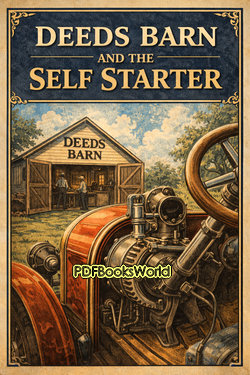
Deeds Barn and the Self Starter
by Anonymous
Innovation, Rural Industry, and Mechanical Ingenuity
Deeds Barn and the Self Starter by Anonymous is an inventive early twentieth-century story blending mechanical progress, rural life, and practical problem-solving. The narrative reflects a period of growing fascination with machinery and modern invention, particularly as technological innovation began transforming agriculture, transportation, and everyday labor.
The story presents invention not as distant scientific theory, but as something directly connected with ordinary people seeking practical solutions to real-world challenges.
The Importance of the Self Starter
The narrative centers upon the development or use of a “self starter,” a mechanical innovation associated with engines or machinery designed to reduce physical effort and improve efficiency. Within the setting of Deeds Barn and the surrounding rural community, the invention attracts attention because of its potential to simplify difficult work and modernize daily life.
As characters experiment with or debate the usefulness of the machine, questions arise concerning reliability, practicality, and the changing relationship between human labor and technology. Excitement surrounding the invention reflects broader social enthusiasm for mechanical advancement during the industrial age.
Rather than focusing entirely upon technical details, the story emphasizes the human reactions surrounding invention and modernization.
Industry and Everyday Life
A major theme throughout the work is the gradual transformation of traditional rural life through machinery and industrial progress. The narrative repeatedly explores how innovation may create opportunity while also challenging familiar habits and ways of working.
The work also reflects early twentieth-century admiration for inventors, mechanics, and practical engineering skill. Mechanical devices become symbols of efficiency, ambition, and modern thinking.
At the same time, the story suggests that technology remains most valuable when it serves ordinary human needs rather than replacing human judgment entirely.
This combination of industrial curiosity and social observation gives the work much of its charm.
Historical and Technological Themes Explored Throughout the Story
- Mechanical Innovation: New inventions promise efficiency and modernization.
- Rural Industrial Change: Technology reshapes traditional agricultural and community life.
- Practical Engineering: Mechanical skill and experimentation drive progress.
- Human Adaptation to Technology: Communities react with curiosity, excitement, and skepticism.
- Modernization and Labor: Machines alter the nature of physical work and productivity.
The Story’s Practical and Informative Style
Deeds Barn and the Self Starter uses a straightforward and accessible narrative style focused upon invention, problem-solving, and social change. The anonymous author combines technical interest with human observation, creating a story both educational and entertaining.
The work consistently portrays invention as an important force shaping modern society.
Why the Story Still Holds Historical Interest
Modern readers continue finding Deeds Barn and the Self Starter interesting because its themes of technological innovation, modernization, and practical engineering remain highly relevant today. The story also provides insight into public attitudes toward machinery during a transformative period of industrial development.
Its themes of invention, rural change, engineering, labor, and industrial progress continue appealing to readers interested in technological history, mechanical innovation, transportation history, and early industrial culture.