
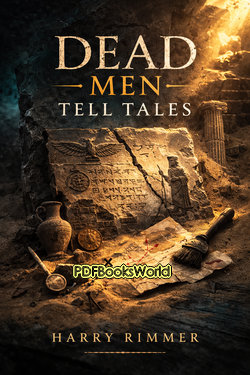
Dead Men Tell Tales
by Harry Rimmer
A Curious Exploration of Mystery, History, and Ancient Testimony
Dead Men Tell Tales by Harry Rimmer is a thought-provoking work that combines historical investigation, archaeology, and religious apologetics. Rimmer, known for his efforts to reconcile scientific discoveries with biblical narratives, examines evidence from the ancient world that he believed supported historical accounts preserved in scripture. Through discussions of artifacts, ruins, inscriptions, and archaeological discoveries, the book seeks to demonstrate how the past can illuminate long-standing historical questions.
The Meaning Behind the Title
The title reflects the book's central idea that the remains of ancient civilizations can "speak" to later generations. Although the people who created monuments, inscriptions, and artifacts are long gone, the evidence they left behind continues to provide valuable information about their lives, beliefs, and societies.
Rimmer uses this concept to argue that archaeological discoveries offer important testimony about historical events and traditions.
Subjects Discussed in the Book
- Archaeology: Discoveries that reveal details about ancient civilizations.
- Historical Records: Evidence preserved through inscriptions and artifacts.
- Ancient Cultures: Civilizations connected to the Near East and biblical history.
- Religious Apologetics: Arguments concerning the historical reliability of scripture.
- Scientific Investigation: The use of material evidence to examine historical claims.
Archaeology as Historical Evidence
One of the book's primary themes is the value of archaeological research. Excavations, inscriptions, and ancient structures can provide information unavailable from written sources alone. By examining such discoveries, historians and archaeologists gain insight into the cultures and events of the distant past.
Rimmer presents these findings as important contributions to historical understanding.
Harry Rimmer's Approach
Harry Rimmer was a prominent lecturer and writer who sought to engage readers interested in both science and religion. His works frequently argued that scientific and historical discoveries could be interpreted in ways consistent with biblical narratives. While some of his conclusions have been debated by later scholars, his writings played a notable role in popular discussions about faith and evidence during the early twentieth century.
His enthusiasm for investigation and explanation is evident throughout the book.
A Reflection of Its Time
The book also serves as a historical example of how archaeology was presented to general audiences during the period in which it was written. It reflects contemporary interests in ancient civilizations, biblical history, and the relationship between science and religion.
Modern readers may find value in understanding both the discoveries discussed and the intellectual context in which the book was produced.
Why the Book Remains Interesting
Interest in archaeology and ancient history continues to attract readers who wish to learn how evidence from the past contributes to historical knowledge. Works such as Dead Men Tell Tales demonstrate the enduring fascination with uncovering forgotten civilizations and interpreting the traces they left behind.
The book offers insight into the ways historical discoveries have been used to address broader cultural and religious questions.
A Journey Into the Evidence of the Ancient World
Dead Men Tell Tales combines archaeology, history, and religious inquiry into an engaging exploration of the ancient past. Through discussions of artifacts, inscriptions, and archaeological discoveries, Harry Rimmer seeks to show how long-silent civilizations continue to inform modern understanding. The book remains of interest to readers fascinated by archaeology, historical investigation, and the enduring dialogue between faith and evidence.
Similar Genres
About the Author
Harry Rimmer was an American author, lecturer, educator, and researcher whose writings explored the relationship between science, history, archaeology, and religious belief. Throughout his career, he sought to present complex subjects in a way that was understandable to general readers, encouraging thoughtful discussion about the natural world and historical evidence. Explore Harry Rimmer books to discover the author's life, literary career, and access notable works.