
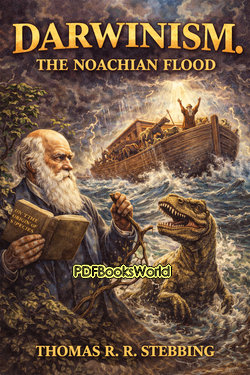
Darwinism. The Noachian Flood
by Thomas R. R. Stebbing
A Nineteenth-Century Examination of Evolution and Biblical History
Darwinism. The Noachian Flood by Thomas R. R. Stebbing is a historical and argumentative work discussing the relationship between evolutionary theory and the Biblical account of Noah’s Flood. Written during a period of intense debate surrounding Charles Darwin’s ideas, the book reflects broader intellectual conflicts between science, religion, geology, and traditional interpretations of scripture.
The work examines whether scientific discoveries concerning natural history, evolution, and the age of the Earth can be reconciled with Biblical narratives. Through discussion and criticism, Stebbing engages with questions that deeply influenced nineteenth-century religious and scientific thought.
The book belongs to the larger cultural debate surrounding Darwinism and its impact on established beliefs.
Science, Scripture, and Historical Interpretation
The book explores the Biblical story of the Noachian Flood alongside scientific theories about geology, biology, and natural history. Stebbing considers how fossil evidence, species development, and geological change affected traditional understandings of creation and catastrophe.
Questions about the accuracy of scriptural interpretation and the authority of scientific evidence form a central part of the discussion. The work reflects efforts by many nineteenth-century thinkers to either defend religious tradition or reinterpret it in light of modern science.
The debate reveals the broader cultural struggle to understand humanity’s place within nature and history.
The Analytical Style of Thomas R. R. Stebbing
Thomas R. R. Stebbing writes in a formal and argumentative style emphasizing evidence, interpretation, and intellectual comparison. The language reflects the scholarly and public debates of the Victorian era, when scientific and theological issues were widely discussed.
The work combines scientific references with philosophical and religious reasoning, encouraging readers to examine competing explanations of natural history.
Stebbing’s approach reflects the seriousness with which evolutionary theory was received during the nineteenth century.
Main Themes and Intellectual Questions
The book explores themes of evolution, Biblical interpretation, scientific evidence, geological history, and the relationship between faith and reason. It also reflects broader debates about authority, tradition, and modern intellectual change.
Through its examination of Darwinism and the Flood narrative, the work highlights the challenges societies faced when scientific discoveries questioned long-established beliefs.
Why the Book Still Holds Historical Interest
Darwinism. The Noachian Flood remains historically important because it documents the cultural and intellectual debates that followed the rise of evolutionary theory. Readers interested in the history of science and religion often study such works to understand how nineteenth-century thinkers responded to scientific change.
The book also reveals how geology and biology transformed discussions about creation, history, and humanity’s origins.
Its examination of scientific and religious conflict continues to hold educational value.
The Lasting Importance of Evolution Debates
The publication of Darwin’s evolutionary ideas created one of the most influential intellectual transformations of the modern era. Debates surrounding evolution affected religion, philosophy, education, and social thought across Europe and America.
Writers and scholars attempted to defend, criticize, or reinterpret traditional beliefs in response to new scientific evidence about life and Earth’s history.
The continuing study of scientific history and religious thought helps preserve interest in works like this.
Final Thoughts
Darwinism. The Noachian Flood by Thomas R. R. Stebbing is a historically significant examination of the relationship between evolutionary science and Biblical tradition. Through analytical discussion and intellectual debate, the work reflects the profound cultural questions raised by Darwinism during the nineteenth century.
For readers interested in the history of science, religion, philosophy, and Victorian intellectual culture, this work remains both informative and thought-provoking.
Similar Genres
About the Author
Thomas R. R. Stebbing, fully known as Thomas Roscoe Rede Stebbing, was an English zoologist, marine biologist, educator, and author whose scientific research made important contributions to the study of crustaceans and marine life. Explore Thomas R. R. Stebbing books to discover the author's life, literary career, and access notable works.