
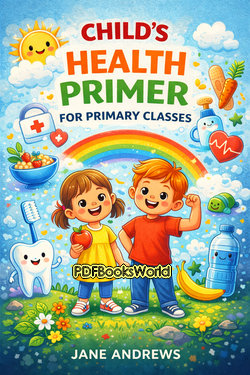
Child's Health Primer For Primary Classes
by Jane Andrews
Health, Hygiene, and Early Scientific Education for Children
Child's Health Primer For Primary Classes by Jane Andrews is an educational work designed to introduce young students to the basic principles of health, cleanliness, exercise, nutrition, and bodily care. Written for primary school audiences, the book reflects the growing nineteenth-century interest in public health, childhood education, and the scientific teaching of hygiene as an important part of everyday life.
Andrews presents health education in clear and simple language, encouraging children to understand their bodies and develop habits that support physical wellbeing and personal responsibility.
Teaching Health Through Simple Scientific Lessons
The book explains basic ideas concerning the human body, cleanliness, breathing, food, exercise, sleep, and disease prevention in ways appropriate for young readers. Andrews emphasizes that healthy habits are essential for strength, happiness, and proper growth.
She also discusses the importance of fresh air, proper clothing, bathing, clean water, and balanced living while encouraging children to observe the effects of healthy and unhealthy behavior.
Rather than relying upon fear or strict moral instruction alone, the work attempts to build understanding through practical explanation and simple scientific reasoning.
The volume reflects a period when schools increasingly incorporated lessons on hygiene and public health into elementary education.
Its tone combines warmth, instruction, and concern for childhood wellbeing.
The Connection Between Education and Public Health
A central idea throughout the book is that teaching healthy habits early in life benefits both individuals and society as a whole.
Andrews repeatedly emphasizes that children who understand cleanliness, nutrition, and bodily care are more likely to grow into healthy and responsible adults.
The work also reflects broader nineteenth-century concerns about disease prevention, sanitation, and improving public health through education.
This connection between schooling and physical wellbeing gave health primers an important place within early educational reform movements.
Health Topics Explored Throughout the Book
- Cleanliness and Personal Hygiene: Andrews explains the importance of bathing, clean clothing, and healthy surroundings.
- Food, Nutrition, and Growth: The book explores how proper nourishment supports strength and development.
- Exercise and Fresh Air: Physical activity and outdoor life are presented as important parts of health.
- The Human Body and Bodily Care: Simple lessons introduce children to basic bodily functions and healthy habits.
- Disease Prevention and Healthy Living: Scientific understanding is connected to everyday choices and personal responsibility.
The book reflects the growing influence of science and hygiene education within childhood instruction during the nineteenth century.
Building Lifelong Habits Through Early Education
One of the work’s strongest ideas is that healthy living begins with simple daily habits learned during childhood.
Andrews repeatedly demonstrates how ordinary actions involving cleanliness, rest, exercise, and diet contribute to long-term wellbeing.
The book also emphasizes that knowledge about health should be practical, understandable, and closely connected to everyday life.
This accessible educational approach helped health instruction become an important part of elementary education.
Jane Andrews’ Clear and Child-Friendly Style
Child's Health Primer For Primary Classes demonstrates Jane Andrews’ ability to explain health and scientific ideas in language suitable for young students without sacrificing clarity or educational value.
The writing remains gentle, organized, and strongly focused upon encouraging curiosity and responsible behavior through positive instruction.
Andrews consistently presents health education as both useful knowledge and an important part of personal development.
Why the Book Still Holds Historical and Educational Interest
Modern readers continue finding Child's Health Primer For Primary Classes historically valuable because it reflects early efforts to combine science, hygiene, and childhood education within public schooling.
The book also provides insight into nineteenth-century attitudes toward health, sanitation, disease prevention, and moral responsibility during a period of expanding educational reform.
Its emphasis on cleanliness, exercise, nutrition, and healthy habits continues connecting with many principles still taught in modern health education today.
For readers interested in public health, childhood education, hygiene history, social reform, scientific education, and the history of school instruction, this work remains historically revealing, educational, and socially significant.
Similar Genres
About the Author
Jane Andrews was an American educator, author, and pioneer in children's literature whose books combined education with engaging storytelling. She believed that young learners understood complex subjects best when lessons were presented in simple language and connected to everyday experiences. Explore Jane Andrews books to discover the author's life, literary career, and access notable works.