
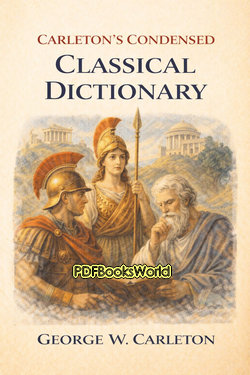
Carleton's Condensed Classical Dictionary
by George W. Carleton
The Ancient World Made Accessible in Carleton’s Condensed Classical Dictionary
Mythology, ancient history, legendary heroes, and classical culture come together in Carleton's Condensed Classical Dictionary, a reference work created to help readers better understand the people, places, and stories of ancient Greece and Rome.
Designed as a practical and educational guide, the book introduces readers to important figures from classical mythology, literature, philosophy, and history in a concise and organized format. During a time when classical education played a major role in schools and universities, works like this became valuable tools for students and general readers alike.
Even today, the dictionary remains an interesting introduction to the foundations of classical civilization and ancient storytelling traditions.
The Purpose of the Dictionary
The book was created to simplify and summarize important information from the ancient classical world. Rather than presenting long academic discussions, it provides short explanations and definitions that help readers quickly identify major figures and concepts.
The dictionary covers a wide range of classical subjects, including:
Greek mythology, Roman mythology, ancient rulers, philosophers, legendary heroes, historical battles, famous cities, and literary references.
This structure allows readers to easily explore topics connected to classical culture and literature.
Main Topics Found in the Dictionary
- Greek Gods and Heroes – Readers encounter famous figures such as Zeus, Athena, Hercules, and Achilles.
- Roman Mythology – The book explains Roman deities, legends, and historical traditions.
- Ancient Philosophers and Writers – Important thinkers and authors from the classical world are introduced.
- Historical Events and Places – Battles, empires, cities, and rulers are summarized clearly.
- Classical Literature References – The dictionary helps readers understand names and references commonly found in ancient texts.
Why Classical Dictionaries Were Important
During earlier centuries, students frequently studied Latin, Greek literature, mythology, and ancient history as part of formal education. Classical dictionaries helped readers understand the many references appearing in poetry, philosophy, drama, and historical writing.
Books like this served as educational companions for:
Students, teachers, scholars, historians, literature readers, and anyone studying classical civilization.
They made complicated historical and mythological material easier to understand.
The Fascination of Greek and Roman Mythology
One reason works about classical culture remain popular is the lasting power of Greek and Roman mythology. Ancient myths introduced legendary heroes, gods, monsters, and epic adventures that continue to influence modern storytelling.
Many modern books, films, and artworks still draw inspiration from classical myths involving:
Heroic quests, divine conflict, tragic destiny, warfare, wisdom, love, revenge, and supernatural power.
The dictionary helps readers navigate this rich and complex world of ancient stories.
The Educational Style of the Book
The writing style is direct, concise, and designed for easy reference. Entries are organized clearly so readers can quickly locate information about specific people, places, or concepts.
Rather than overwhelming readers with detailed scholarly analysis, the book focuses on accessibility and practical learning.
This concise format helped make classical knowledge more approachable for general audiences.
Why Modern Readers Still Find It Interesting
Although modern education no longer focuses as heavily on classical studies, interest in ancient mythology and history remains strong. Readers continue to explore Greek and Roman culture through literature, entertainment, and historical study.
The dictionary still appeals because it:
Provides quick explanations, introduces classical mythology clearly, supports historical learning, and helps readers understand ancient references in literature and culture.
Its straightforward structure makes it useful for beginners exploring classical subjects.
The Influence of Classical Civilization
The civilizations of ancient Greece and Rome influenced philosophy, politics, architecture, literature, science, and law throughout Western history. Understanding classical references often helps readers better appreciate later literary and historical works.
Books like this dictionary played an important role in preserving and teaching that cultural heritage.
Final Thoughts
Carleton's Condensed Classical Dictionary remains a valuable introduction to the myths, history, and cultural figures of the ancient classical world. Through concise explanations and organized reference material, the book opens the door to centuries of mythology, literature, and historical tradition.
For readers interested in ancient Greece, Roman civilization, mythology, or classical education, the dictionary continues to provide an accessible and informative reading experience.
Similar Genres
About the Author
George W. Carleton was an American publisher, editor, and author who helped make classical knowledge more accessible to everyday readers. Best known for preparing concise reference works, Carleton believed that important subjects from history, mythology, and literature should be presented in a simple and practical format. Explore George W. Carleton books to discover the author's life, literary career, and access notable works.