
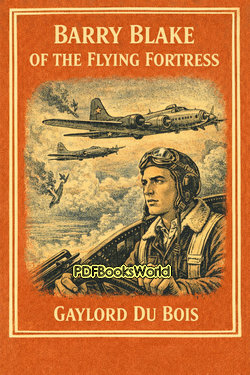
Barry Blake of the Flying Fortress
by Gaylord Du Bois
Danger in the Skies During the Age of Wartime Aviation
Engines roar through heavy clouds while enemy aircraft appear across the horizon and anti-aircraft fire flashes below. Barry Blake of the Flying Fortress by Gaylord Du Bois throws readers directly into the fast-moving world of military aviation, where courage, teamwork, and split-second decisions determine survival.
Written during the era when aviation adventure stories captivated young audiences, the novel combines wartime action with the excitement of modern technology and heroic aerial combat.
The Flying Fortress as a Symbol of Air Power
The title refers to the famous “Flying Fortress” bomber aircraft, a machine that became one of the most recognizable symbols of twentieth-century air warfare.
Large, heavily armed, and capable of long-distance missions, these aircraft represented both technological achievement and enormous wartime risk.
Inside the story, the bomber becomes more than transportation. It functions almost like a moving battlefield suspended in the sky.
Barry Blake’s Role in the Conflict
Barry Blake enters a world where pilots and air crews face constant danger from enemy fighters, mechanical failure, weather conditions, and combat missions deep inside hostile territory.
As the story progresses, he must prove not only bravery but also discipline, quick thinking, and loyalty to his fellow crew members.
The novel emphasizes that survival in wartime aviation depends heavily on teamwork.
What Readers Encounter Throughout the Adventure
- High-altitude combat missions filled with suspense and danger
- Enemy aircraft encounters requiring rapid tactical decisions
- Military camaraderie among pilots and crew members
- Technical details of wartime aviation adding realism and excitement
These elements create a story driven by momentum and constant tension.
The Popularity of Aviation Fiction
During the early and mid-twentieth century, aviation represented modern progress, adventure, and heroism. Airplanes transformed warfare and captured public imagination in ways earlier technologies never had.
Adventure fiction quickly embraced pilots as new kinds of heroes facing extraordinary danger in the skies.
Books like this allowed readers to experience the excitement of aerial combat from a safe distance while celebrating bravery and patriotic service.
The Style and Pace of Gaylord Du Bois
Gaylord Du Bois writes with directness and strong narrative energy. Action scenes move quickly, often emphasizing suspense, mechanical danger, and rapid decision-making.
The storytelling focuses on excitement and accessibility, making the novel especially appealing to younger readers interested in aviation and military adventure.
The clear pacing helps maintain tension throughout the story.
Why Barry Blake of the Flying Fortress Still Appeals to Adventure Fans
Barry Blake of the Flying Fortress continues to entertain readers because aerial warfare remains one of the most dramatic settings in adventure fiction. The combination of danger, speed, technology, and teamwork creates naturally exciting storytelling.
For readers interested in classic aviation tales, wartime fiction, military adventure, and historical aircraft stories, Gaylord Du Bois’s novel offers an energetic journey through the perilous skies of twentieth-century combat.
Similar Genres
About the Author
Gaylord Du Bois was an American author, editor, and storyteller best known for writing adventure fiction for young readers. Throughout his career, he created exciting stories that combined action, courage, and imagination, often drawing inspiration from aviation, history, and the American frontier. Explore Gaylord Du Bois books to discover the author's life, literary career, and access notable works.