
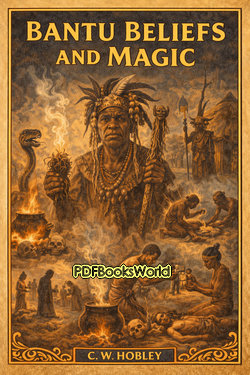
Bantu Beliefs and Magic
by C. W. Hobley
Exploring Traditional Beliefs and Cultural Practices
Bantu Beliefs and Magic by C. W. Hobley is an anthropological study that examines the religious beliefs, spiritual traditions, and cultural practices of various Bantu-speaking peoples in Africa. Written during the early twentieth century, the book reflects an effort to document customs, folklore, rituals, and worldviews that were of great interest to scholars of history, religion, and ethnography. Hobley sought to record these traditions as they were understood and practiced within the communities he observed.
The work provides insight into how people explained natural events, understood the relationship between the physical and spiritual worlds, and maintained social order through shared beliefs and customs. While some interpretations reflect the perspectives and limitations of the period in which the book was written, it remains an important historical source for the study of African cultures.
The Meaning of Belief and Magic in Traditional Societies
In many traditional societies, religion, spirituality, and daily life are closely interconnected. Practices that outside observers once described as "magic" often served broader purposes within the community, including healing, protection, conflict resolution, and the preservation of cultural values.
Hobley explores how spiritual beliefs influenced everyday decisions and social relationships. These traditions were frequently linked to broader understandings of ancestry, morality, and the unseen forces believed to shape human experience.
The Importance of Ancestors
A recurring theme in many Bantu belief systems is the significance of ancestors. Ancestors were often viewed as continuing members of the community whose influence extended beyond physical life. Respect for ancestral traditions helped strengthen family ties and maintain cultural continuity across generations.
Rituals and ceremonies associated with ancestors frequently played an important role in community life, reinforcing social bonds and shared identity.
Major Themes Found Throughout the Book
- Spiritual Worldviews: Beliefs about the relationship between visible and invisible realities.
- Ancestral Traditions: The enduring influence of ancestors within community life.
- Folklore and Custom: Stories, rituals, and practices passed through generations.
- Cultural Identity: Shared beliefs that help unite and guide communities.
These themes provide valuable insight into the social and spiritual foundations of traditional societies.
Rituals and Community Life
The book describes a variety of ceremonies and practices connected to important life events, social responsibilities, and communal well-being. Such rituals often served practical as well as spiritual purposes, helping communities address uncertainty, celebrate milestones, and reinforce collective values.
Through these observations, readers gain a deeper appreciation for the role of ritual in maintaining social cohesion and cultural continuity.
Anthropology and Historical Documentation
One of the book's greatest historical values lies in its effort to record traditions that might otherwise have gone undocumented. During the period when Hobley wrote, anthropologists increasingly sought to preserve information about languages, customs, and belief systems around the world.
Modern readers should recognize that the language and interpretations found in early ethnographic works often reflect the assumptions of their time. Nevertheless, such texts can still provide useful information when read with historical awareness and critical understanding.
Why the Book Continues to Interest Readers
- Cultural Insight: A detailed look at traditional beliefs and practices.
- Historical Value: Documentation of customs and folklore from an earlier era.
- Anthropological Perspective: Examination of religion, ritual, and community life.
- Comparative Study: Useful for understanding different approaches to spirituality and culture.
These qualities make the work significant for students of anthropology, history, and religion.
Why Bantu Beliefs and Magic Remains Worth Reading
Bantu Beliefs and Magic remains an important historical and anthropological study of African cultural traditions. Through its examination of spiritual beliefs, ancestral practices, folklore, and communal rituals, C. W. Hobley provides readers with a window into the worldview of various Bantu-speaking communities. While best approached with an awareness of its historical context, the book continues to offer valuable insight into the diversity and richness of human belief systems and cultural heritage.
Similar Genres
About the Author
C. W. Hobley, or Charles William Hobley, was an English anthropologist, colonial administrator, and ethnographer whose extensive field research contributed significantly to the early study of East African societies. Working for many years in British East Africa, he documented the customs, languages, traditions, and social structures of numerous communities. Explore C. W. Hobley books to discover the author's life, literary career, and access notable works.