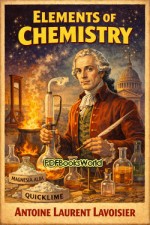
Antoine Laurent Lavoisier
Antoine Laurent Lavoisier was a French chemist, economist, and public administrator whose discoveries transformed chemistry into a modern experimental science. Often regarded as the "Father of Modern Chemistry," he replaced outdated theories with precise measurement and careful experimentation, establishing principles that continue to guide scientific research. His investigations into combustion, gases, and chemical reactions fundamentally changed the understanding of matter. Lavoisier also helped develop a systematic chemical nomenclature, making scientific communication clearer and more consistent for researchers around the world.
Revolutionizing the Science of Chemistry
Lavoisier believed that every scientific conclusion should be supported by accurate measurement. Using carefully designed experiments, he demonstrated that mass is conserved during chemical reactions, replacing the long-standing phlogiston theory with a more accurate explanation of combustion involving oxygen. His quantitative approach transformed chemistry from a largely descriptive subject into a precise experimental science based on observation and evidence.
His work extended beyond combustion. Lavoisier identified and named oxygen and hydrogen, investigated the composition of air and water, and contributed to a better understanding of acids, oxidation, and respiration. These discoveries laid the foundation for much of modern chemical theory.
Shaping Scientific Education
In addition to his experimental research, Lavoisier sought to organize chemical knowledge in a logical and systematic manner. He believed that clear terminology and structured teaching were essential for scientific progress. His publications presented chemistry as an interconnected discipline governed by universal principles rather than isolated observations. This educational approach influenced generations of scientists and became a model for chemistry textbooks throughout the world.
Among his most influential works is Elements of Chemistry, a landmark publication that introduced a modern framework for understanding chemical substances, reactions, and scientific methods. The book remains one of the most important milestones in the history of chemistry.
Major Works
- Elements of Chemistry – Establishes the foundations of modern chemistry through systematic experiments and clear scientific principles.
- Méthode de Nomenclature Chimique – Introduces a standardized system of chemical naming that transformed scientific communication.
- Memoirs on Chemistry – A collection of influential papers covering combustion, gases, oxidation, and chemical analysis.
- Essays on the Nature of Air and Combustion – Explores the role of gases in chemical reactions and the process of combustion.
- Collected Scientific Papers – Brings together his pioneering research that established many principles of modern chemistry.
A Legacy That Defines Modern Chemistry
Antoine Laurent Lavoisier transformed chemistry by introducing precision, measurement, and logical experimentation into scientific practice. His discoveries continue to influence chemistry, physics, biology, and environmental science, while his systematic methods remain central to scientific investigation. His enduring legacy stands as one of the greatest achievements in the history of science, inspiring generations of researchers to seek knowledge through evidence and careful observation.
Readers visiting PDF Books World can explore the works of Antoine Laurent Lavoisier and discover timeless scientific writings that helped establish the foundations of modern chemistry and transformed humanity's understanding of the natural world.