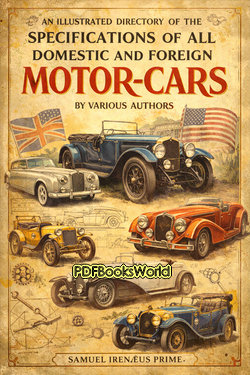
An Illustrated Directory of the Specifications of All Domestic and Foreign Motor-cars
by Various Authors
A Detailed Reference Guide to Early Motor-Car Design and Engineering
An Illustrated Directory of the Specifications of All Domestic and Foreign Motor-cars is a technical and historical reference work focused on the rapidly growing automobile industry during the early years of motor transportation. The book gathers detailed information about motor-car models from different countries, offering readers a broad overview of automotive engineering, design, and manufacturing during an important period in transportation history.
The directory was created as both a practical reference and an informational guide for buyers, mechanics, engineers, and automobile enthusiasts. It reflects the excitement surrounding the rise of motor vehicles as cars began transforming travel, business, and everyday life across the world.
The combination of technical specifications and illustrations helped readers compare different vehicles and understand the progress of automotive technology.
A Broad Survey of Early Motor-Car Development
The book includes descriptions and specifications for many domestic and international automobiles. Information often covers engine size, horsepower, wheelbase, fuel systems, transmission design, body style, and mechanical construction.
Readers are introduced to the growing diversity of motor-car manufacturing during a time when automobile companies were competing to improve speed, reliability, comfort, and engineering quality.
The directory also reflects how quickly automotive technology evolved during the early twentieth century, with manufacturers constantly introducing new mechanical improvements and design features.
The Informative and Technical Style of the Directory
The writing is practical, organized, and strongly focused on technical detail. Unlike narrative books or general histories, the directory aims to provide clear factual information for comparison and reference.
Illustrations play an important role by helping readers examine vehicle appearance, mechanical layout, and engineering features. The combination of visual material and specifications made such directories valuable tools for both professionals and automobile enthusiasts.
The work reflects the growing importance of technical publishing during the industrial age.
Main Topics Covered in the Directory
- Automobile specifications and engineering details
- Domestic and international motor-car manufacturers
- Early automotive technology and design
- The development of transportation and industry
Why the Book Still Holds Historical Importance
An Illustrated Directory of the Specifications of All Domestic and Foreign Motor-cars remains historically valuable because it documents the early automobile industry during a period of rapid technological change. Readers interested in transportation history and automotive engineering often study works like this to understand how motor vehicles developed over time.
The directory also preserves information about manufacturers and vehicle models that may no longer exist today. It offers insight into the engineering priorities, design trends, and industrial competition of the early automotive era.
Its technical detail makes it useful not only for historians, but also for collectors and restoration enthusiasts.
The Lasting Fascination With Early Automobiles
Early motor-cars continue to attract interest because they represent a major turning point in modern transportation and industrial development. Automobiles changed the design of cities, travel habits, business systems, and everyday life across the world.
Books like this helped buyers and engineers understand a fast-growing technology that was still new and rapidly evolving.
The continuing popularity of vintage automobiles and automotive history helps preserve the importance of technical directories from this period.
Final Thoughts
An Illustrated Directory of the Specifications of All Domestic and Foreign Motor-cars is a detailed and historically important reference work documenting the early development of motor vehicles and automotive engineering. Through technical specifications and illustrations, the book captures a period of innovation and industrial growth that transformed modern transportation.
For readers interested in automotive history, engineering, industrial design, and vintage vehicles, this work remains both informative and historically fascinating.