
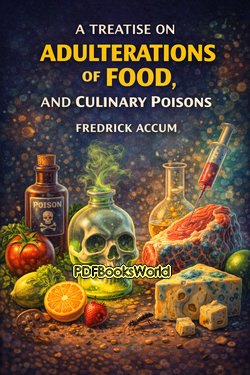
A Treatise on Adulterations of Food, and Culinary Poisons
by Fredrick Accum
Food Safety, Chemical Fraud, and the Hidden Dangers Within Everyday Consumption
A Treatise on Adulterations of Food, and Culinary Poisons by Fredrick Accum is a groundbreaking scientific and public health work exposing the widespread adulteration of food and drink during the early nineteenth century. First published in 1820, the book investigates how merchants and manufacturers secretly contaminated common foods with dangerous substances in order to increase profit, improve appearance, or preserve products artificially.
Accum combines chemistry, public health, and investigative criticism while presenting food adulteration as both a scientific problem and a serious social danger affecting ordinary consumers.
The Hidden Chemistry of Food Adulteration
The book examines numerous examples of contaminated food products including bread, tea, wine, beer, sweets, spices, pickles, and dairy goods. Accum explains how manufacturers frequently added harmful chemicals such as copper compounds, lead, alum, chalk, and poisonous colorants to improve texture, weight, flavor, or visual appearance.
He also discusses methods for detecting adulteration through chemical testing and laboratory examination, emphasizing the growing importance of analytical chemistry in protecting public health.
Rather than treating food production as a purely commercial activity, the work demonstrates how industrial practices without proper regulation could endanger entire populations.
The volume reflects one of the earliest major scientific campaigns for consumer protection, food safety, and public awareness concerning chemical contamination.
Its tone combines scientific investigation with moral outrage and social criticism.
The Relationship Between Chemistry and Public Health
A central idea throughout the book is that chemistry has an important role in protecting society from fraud, poisoning, and unsafe manufacturing practices.
Accum repeatedly demonstrates how scientific analysis can expose hidden dangers invisible to ordinary consumers.
The work also reflects growing concern during the industrial era about the effects of mass production, urban commerce, and unregulated markets upon public wellbeing.
This combination of chemistry and social reform gives the book lasting historical significance.
Scientific and Social Topics Explored Throughout the Book
- Food Adulteration and Chemical Contamination: Accum investigates harmful substances added to common foods and beverages.
- Culinary Poisons and Public Health Risks: The book explores how toxic additives endangered consumers.
- Chemical Testing and Detection: Scientific analysis becomes a tool for exposing fraud and contamination.
- Industrial Production and Commercial Ethics: The work criticizes dishonest manufacturing practices driven by profit.
- The Early History of Consumer Protection: Public awareness and scientific oversight are presented as essential safeguards for society.
The book reflects the growing influence of chemistry within medicine, sanitation, and social reform during the nineteenth century.
The Fight Against Invisible Dangers
One of the work’s strongest ideas is that scientific knowledge can reveal hidden threats embedded within everyday life.
Accum repeatedly emphasizes that consumers often unknowingly exposed themselves to dangerous chemicals through ordinary food and drink.
The book also demonstrates how advances in laboratory chemistry created new possibilities for identifying contamination and demanding accountability from manufacturers.
This emphasis on scientific investigation and public responsibility helped influence later food safety movements and regulatory reforms.
Fredrick Accum’s Investigative Scientific Style
A Treatise on Adulterations of Food, and Culinary Poisons demonstrates Fredrick Accum’s ability to combine chemical science with public advocacy and investigative writing.
The writing remains direct, analytical, and strongly focused upon exposing dangerous commercial practices through evidence and experimentation.
Accum consistently presents chemistry as a practical science capable of protecting human health and improving society.
Why the Book Still Holds Historical and Scientific Importance
Modern readers continue finding A Treatise on Adulterations of Food, and Culinary Poisons historically important because it represents one of the earliest major scientific studies of food safety and consumer protection.
The book also provides insight into the health dangers and industrial practices that accompanied rapid urbanization and commercial expansion during the nineteenth century.
Its discussions of contamination, regulation, and chemical testing remain highly relevant within modern debates concerning food safety, industrial ethics, and public health oversight.
For readers interested in chemistry, toxicology, food science, public health, industrial history, consumer protection, and the history of scientific reform, this work remains historically revealing, scientifically important, and socially significant.
Similar Genres
About the Author
Fredrick Accum was a German-born chemist, scientific educator, and author who became one of the earliest and most influential advocates for food safety and consumer protection. After settling in England, he gained recognition for his practical lectures on chemistry and his efforts to explain scientific principles to the public. Explore Fredrick Accum books to discover the author's life, literary career, and access notable works.