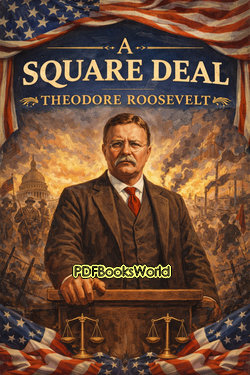
A Square Deal
by Theodore Roosevelt
A Vision for Fairness, Opportunity, and Responsible Government
A Square Deal by Theodore Roosevelt presents the ideas and principles that guided one of America's most influential presidents. The work reflects Roosevelt's belief that government should serve the interests of all citizens rather than favoring any particular group. Through discussions of economic policy, social responsibility, and public welfare, he outlines a vision of fairness that seeks to balance the needs of workers, businesses, and consumers while promoting national progress.
Understanding the Square Deal
The phrase "Square Deal" became closely associated with Roosevelt's political philosophy. It represented his commitment to ensuring that every individual received fair treatment and equal opportunity under the law. Rather than supporting extremes, Roosevelt advocated practical reforms designed to strengthen society while preserving economic growth and individual initiative.
A Response to a Changing Nation
At the beginning of the twentieth century, the United States was experiencing rapid industrialization and economic expansion. While this growth created new opportunities, it also brought challenges such as corporate concentration, labor disputes, and concerns about consumer protection. Roosevelt believed that government had a responsibility to address these issues and promote the public interest.
Key Ideas Presented in the Book
- Fair Competition: Businesses should operate under rules that encourage honest competition.
- Consumer Protection: Citizens deserve safeguards against harmful practices.
- Conservation: Natural resources should be managed responsibly for future generations.
- Public Responsibility: Government should act when necessary to protect the common good.
Balancing Progress and Reform
Roosevelt sought a middle path between unrestricted economic power and excessive government control. He argued that lasting prosperity depended on fairness, accountability, and responsible leadership. His approach emphasized reform without rejecting the benefits of economic development and innovation.
Major Themes in the Work
- Fairness: Equal treatment is essential to a healthy society.
- Opportunity: Individuals should have the chance to succeed through effort and ability.
- Responsibility: Both citizens and institutions have duties to the broader community.
- Reform: Positive change can address social and economic challenges.
- Public Service: Government should work for the benefit of all people.
Theodore Roosevelt’s Leadership Philosophy
Roosevelt was known for his energetic leadership and belief in active citizenship. His writing reflects a practical approach to governance, emphasizing action, accountability, and national unity. He encouraged Americans to participate in public life and contribute to the country's continued development.
Why the Book Remains Relevant
A Square Deal continues to attract readers because many of the issues it addresses remain important today. Questions about economic fairness, government responsibility, consumer rights, and environmental stewardship continue to shape public discussions. Roosevelt's ideas provide valuable insight into the challenges of balancing progress with fairness, making this work an important contribution to political and social thought.
Similar Genres
About the Author
Theodore Roosevelt was the twenty-sixth President of the United States, a soldier, historian, naturalist, explorer, and one of the most prolific American authors of the twentieth century. Born in New York City in 1858, Roosevelt combined an extraordinary political career with a lifelong passion for writing, producing more than forty books on history, politics, conservation, hunting, and travel. Explore Theodore Roosevelt books to discover the author's life, literary career, and access notable works, including Good hunting; in pursuit of big game in the West , and more.