
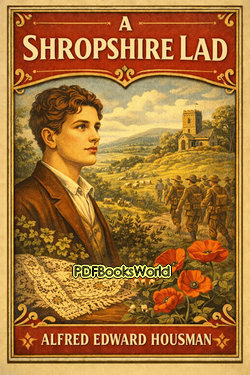
A Shropshire Lad
by Alfred Edward Housman
Youth, Mortality, and Lost Innocence in One of England’s Most Beloved Poetry Collections
Rolling countryside, quiet villages, fleeting youth, unspoken sorrow, and the awareness of mortality shape the haunting emotional atmosphere of A Shropshire Lad by Alfred Edward Housman. First published in the late nineteenth century, the collection became one of the most admired works of English poetry, celebrated for its musical simplicity, emotional restraint, and profound meditation on time, loss, and the fragile beauty of life.
Although many poems appear calm and pastoral on the surface, they often contain deep currents of sadness, loneliness, and emotional longing.
The Landscape of Rural England
The poems are closely connected with the imagined countryside of Shropshire, a rural English setting filled with hills, farms, roads, and village life.
Nature in the collection appears beautiful yet temporary, constantly reminding readers that seasons change and human life passes quickly.
Fields, trees, sunsets, and quiet roads become symbols of memory, youth, and emotional transience.
The landscape carries both comfort and melancholy throughout the work.
Characters
The poems introduce recurring figures who often represent ordinary young men confronting love, war, disappointment, or mortality.
- Young soldiers and country lads appear facing danger, death, or separation.
- Lovers experience longing, regret, or emotional distance.
- Travelers and wanderers reflect on memory and passing time.
- Anonymous rural voices contribute to the collection’s universal emotional quality.
Rather than detailed individuals, these figures often function as emotional archetypes expressing common human experiences.
Themes
Housman’s poetry repeatedly returns to themes of impermanence and emotional vulnerability.
- The brevity of youth and life
- Mortality and the inevitability of death
- Lost love and emotional loneliness
- Nostalgia for innocence and simpler times
- The relationship between beauty and sadness
The poems often suggest that awareness of mortality intensifies appreciation for fleeting happiness.
The Emotional Tone of the Collection
One of the most remarkable qualities of A Shropshire Lad is its emotional restraint. Housman rarely expresses grief or longing in dramatic language.
Instead, sorrow often appears quietly through understatement, rhythm, and carefully controlled imagery.
This restraint gives the poems extraordinary emotional power.
The sadness feels intimate and deeply human rather than exaggerated.
The Poetic Style of A. E. Housman
Housman writes with clarity, musical rhythm, and deceptively simple language. Many poems resemble traditional folk songs or ballads because of their smooth meter and memorable phrasing.
Beneath this simplicity lies remarkable emotional precision and philosophical depth.
The balance between accessibility and emotional subtlety helped make the collection widely beloved.
Why A Shropshire Lad Still Endures
A Shropshire Lad continues to resonate because its themes remain universal. Youth fades, time passes, love disappoints, and mortality shapes human experience across every generation.
For readers interested in lyric poetry, English pastoral literature, emotional reflection, and beautifully restrained writing about life and loss, Alfred Edward Housman’s collection remains one of the most moving and memorable works in modern poetry.
Similar Genres
About the Author
Alfred Edward Housman, better known as A. E. Housman, was an English poet and classical scholar whose poetry is admired for its simplicity, emotional depth, and timeless reflections on youth, nature, love, and the passage of time. Alongside his distinguished academic career as a scholar of Latin literature, Housman produced poems that have become enduring classics of English literature. Explore Alfred Edward Housman books to discover the author's life, literary career, and access notable works.