
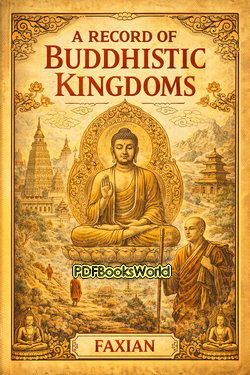
A Record of Buddhistic Kingdoms
by Faxian
A Remarkable Travel Account of Ancient Buddhist Lands
A Record of Buddhistic Kingdoms by Faxian is one of the most important travel narratives from the ancient world. Written by the Chinese Buddhist monk Faxian during the early fifth century, the work describes his long journey across Central Asia and India in search of Buddhist scriptures, religious knowledge, and sacred sites.
The narrative provides valuable information about Buddhist kingdoms, religious practices, cities, trade routes, and everyday life across Asia during a period of major cultural and spiritual exchange. Faxian’s account became historically important not only for Buddhist studies, but also for historians interested in ancient travel and intercultural contact.
The work combines religious devotion, historical observation, and adventurous travel experience.
A Pilgrimage Across Asia
Faxian began his journey in China and traveled across deserts, mountains, and foreign kingdoms in search of authentic Buddhist teachings and sacred texts. His travels took him through regions of Central Asia and deep into India, where Buddhism flourished in many important religious centers.
The narrative describes monasteries, temples, sacred relics, religious ceremonies, and communities of monks. Faxian also records details about laws, customs, governments, climate, food, and trade encountered during his travels.
The journey was difficult and dangerous, involving harsh terrain, uncertain travel conditions, and long distances far from home.
Main Historical Figure in the Narrative
- Faxian: The Chinese Buddhist monk and traveler whose pilgrimage and observations form the heart of the narrative.
His devotion, curiosity, and endurance give the work both spiritual meaning and historical value.
The Clear and Observational Style of Faxian
Faxian writes in a direct and careful style focused strongly on observation and religious interest. His descriptions often emphasize Buddhist practices, sacred places, and monastic life, but he also records valuable information about the societies he visited.
The writing reflects humility and spiritual dedication rather than personal glory or adventure alone. Faxian presents himself primarily as a pilgrim seeking religious truth and preservation of sacred teachings.
The calm and factual tone strengthens the historical reliability and cultural importance of the work.
Main Themes Explored in the Book
- Buddhist pilgrimage and religious devotion
- Travel, exploration, and cultural exchange
- The preservation of sacred texts and teachings
- Observation of ancient societies and customs
Why the Book Still Holds Historical Importance
A Record of Buddhistic Kingdoms remains historically important because it preserves firsthand descriptions of Buddhist civilization and Asian societies during the early fifth century. Historians, religious scholars, and readers interested in ancient travel literature continue to value the work for its detailed observations.
The narrative also provides important evidence about the spread of Buddhism across Asia and the connections between China and India during the ancient world.
Its combination of spiritual purpose and historical observation continues to make the work deeply significant.
The Lasting Importance of Pilgrimage Narratives
Travel accounts written by religious pilgrims often became valuable historical documents because they preserved information about cultures, trade routes, religious centers, and political conditions across large regions.
Faxian’s journey demonstrated the strong cultural and spiritual connections linking different parts of Asia through Buddhism and scholarship.
The continuing interest in religious history and intercultural exchange helps preserve the importance of works like this.
Final Thoughts
A Record of Buddhistic Kingdoms by Faxian is a remarkable historical and religious travel narrative documenting a Buddhist pilgrimage across Asia during the early fifth century. Through careful observation and spiritual dedication, Faxian preserved invaluable information about Buddhist culture, sacred sites, and ancient societies.
For readers interested in Buddhism, ancient history, travel literature, and cultural exchange, this work remains both historically important and deeply fascinating.
Similar Genres
About the Author
Faxian was a Chinese Buddhist monk, pilgrim, translator, and travel writer whose remarkable journey across Asia became one of the most important travel accounts of the ancient world. Living during the late fourth and early fifth centuries, he undertook an arduous pilgrimage from China to India in search of authentic Buddhist scriptures and a deeper understanding of Buddhist teachings. Explore Faxian books to discover the author's life, literary career, and access notable works.