
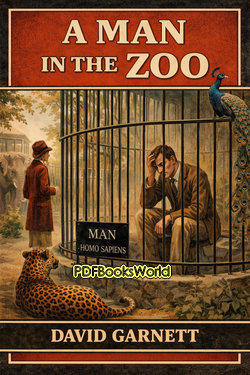
A Man in the Zoo
by David Garnett
A Satirical Novel with an Unusual Premise
A Man in the Zoo by David Garnett is a witty and imaginative novel that uses an extraordinary premise to explore human behavior, social conventions, and the nature of civilization. First published in 1924, the book tells the story of a young Englishman who, after a personal disappointment, makes the remarkable decision to place himself on display in a zoo as though he were an exhibit.
What begins as an act of defiance soon develops into a clever satire of society and its assumptions. Through humor, irony, and sharp observation, Garnett invites readers to question the boundaries between observer and observed, freedom and confinement, and the ways people judge one another.
The novel remains one of the most original works of twentieth-century British fiction.
An Extraordinary Decision
The story centers on John Cromartie, a young man whose romantic frustrations lead him to take an unusual course of action. Determined to make a statement about society and human relationships, he arranges to become a resident exhibit in a zoological garden.
Visitors arrive expecting to observe an odd curiosity, yet Cromartie's presence quickly raises questions about the differences between humans and the creatures housed around him. His decision transforms him into both a spectacle and a commentator on the world outside his enclosure.
This unusual situation forms the foundation of the novel's humor and social criticism.
Satire and Social Commentary
Garnett uses the zoo setting to examine the customs and assumptions of modern society. By placing a human being in a position normally reserved for animals, he reverses expectations and encourages readers to view familiar behavior from a new perspective.
The novel explores themes such as:
- The influence of social conventions.
- The nature of public curiosity.
- The relationship between freedom and restraint.
- The ways individuals are judged by others.
These themes are presented with humor while also inviting thoughtful reflection.
The Zoo as a Symbol
The zoological garden serves as more than a physical location. Throughout the novel, it functions as a symbol that allows Garnett to explore broader questions about society and human nature.
Visitors observe Cromartie just as they observe the animals, yet the distinction between observer and exhibit gradually becomes less certain. Readers are encouraged to consider whether people outside the enclosure are truly more free or rational than the individual within it.
This symbolic dimension adds depth to the story's comic premise.
David Garnett's Distinctive Style
David Garnett was associated with the Bloomsbury Group and became known for his imaginative fiction and unconventional ideas. His writing often combined fantasy, satire, and psychological insight in ways that challenged traditional storytelling expectations.
In A Man in the Zoo, Garnett employs a light and accessible style while addressing serious questions about individuality and social behavior. The balance between entertainment and intellectual inquiry contributes greatly to the novel's appeal.
His originality is evident from the opening pages.
Humor and Human Nature
Much of the novel's charm arises from its humor. The absurdity of the central situation creates numerous opportunities for comic misunderstandings, observations, and encounters.
Yet beneath the comedy lies a thoughtful examination of human behavior. Garnett suggests that many social customs appear no less peculiar than the arrangement of a man living in a zoo enclosure. By exaggerating certain situations, he reveals truths about everyday life and social expectations.
The humor therefore serves both entertainment and critical purposes.
An Enduringly Original Novel
Nearly a century after its publication, A Man in the Zoo continues to stand out because of its inventive premise and intelligent satire. The questions it raises about individuality, public perception, and the structures of society remain relevant to modern readers.
The novel demonstrates how imaginative fiction can illuminate real-world concerns by presenting them in unexpected ways. Its combination of wit, creativity, and insight has helped secure its place as a memorable work of British literature.
The story remains as thought-provoking as it is entertaining.
Final Thoughts
A Man in the Zoo by David Garnett is a clever and highly original novel that transforms an unusual idea into a sharp examination of society and human behavior. Through satire, humor, and imaginative storytelling, Garnett invites readers to reconsider assumptions about freedom, observation, and social convention.
For readers interested in literary satire, unconventional fiction, and thoughtful explorations of human nature, this novel offers a rewarding and memorable reading experience.
Similar Genres
About the Author
David Garnett was a British novelist, editor, and publisher whose imaginative fiction and literary influence made him an important figure in twentieth-century English literature. A member of the celebrated Bloomsbury Group, Garnett was known for his originality, wit, and willingness to experiment with unconventional ideas. Explore David Garnett books to discover the author's life, literary career, and access notable works.