
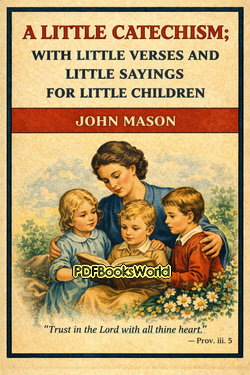
A Little Catechism; With Little Verses and Little Sayings for Little Children
by John Mason
A Gentle Introduction to Faith and Moral Learning
A Little Catechism; With Little Verses and Little Sayings for Little Children is a small religious instruction book created to introduce young children to basic moral and spiritual ideas through short lessons, simple questions and answers, verses, and memorable sayings.
Written in a calm and encouraging style, the book reflects an educational tradition that aimed to teach faith, kindness, obedience, and good behavior through repetition and easy-to-remember language.
Teaching Through Simplicity
The structure of the book is intentionally straightforward. Instead of long explanations or difficult theology, the lessons are broken into brief sections designed for children learning to read and understand religious instruction for the first time.
The text uses:
Short moral teachings, simple prayers, gentle advice, and rhythmic verses that are easy for young readers to remember.
This simplicity helped make catechism books widely used in homes, churches, and early classrooms.
Main Ideas Presented in the Book
- Faith and Worship
Children are introduced to basic religious beliefs and practices. - Kindness and Obedience
The lessons encourage respectful and compassionate behavior. - Honesty and Good Conduct
Moral sayings focus on truthfulness, humility, and self-control. - Prayer and Reflection
Simple devotional passages help children develop habits of prayer and thoughtfulness.
The Role of Verses and Sayings
One of the book’s most distinctive features is its use of short rhymes and memorable sayings.
These passages were intended to help children:
Remember moral lessons, practice reading aloud, and connect religious teaching with everyday behavior.
The rhythmic style also made the lessons easier to repeat and memorize.
A Window Into Earlier Childhood Education
The book reflects an older educational tradition in which religious and moral instruction formed an important part of childhood learning.
Children were often taught through:
Memorization, repetition, short readings, and spoken recitation within family or church settings.
This historical approach gives the work cultural value beyond its religious content.
The Tone and Writing Style
The language throughout the book is gentle, direct, and reassuring rather than dramatic or complex.
The writing emphasizes:
Clarity, warmth, encouragement, simplicity, and moral guidance appropriate for very young readers.
Its calm tone helped make it suitable for early childhood instruction.
Why Such Books Were Once Common
Small catechisms and moral readers were widely used for generations because they combined literacy practice with ethical and religious education.
Parents and teachers valued them as tools for teaching:
Discipline, manners, faith, responsibility, and basic reading skills at the same time.
Modern Interest in the Book
Today, readers often approach the work as both a historical educational text and a reflection of earlier religious culture.
It offers insight into:
Childhood education, family instruction, religious teaching traditions, and moral literature from earlier centuries.
Who May Find This Book Interesting?
A Little Catechism; With Little Verses and Little Sayings for Little Children may especially interest readers focused on:
Religious education, childhood history, devotional literature, historical teaching methods, and early moral instruction books.
Final Thoughts
A Little Catechism; With Little Verses and Little Sayings for Little Children remains a small but revealing example of how earlier generations introduced children to faith, morality, and reading through gentle instruction and memorable verse.
Simple in style yet historically meaningful, the book reflects a tradition where education and moral teaching were closely connected in everyday childhood life.
Similar Genres
About the Author
John Mason was an English minister, religious writer, and educator whose devotional works were written to help readers develop a stronger understanding of Christian faith and daily living. He believed that religious instruction should begin in childhood and be presented in a simple, thoughtful, and encouraging way. Explore John Mason books to discover the author's life, literary career, and access notable works.