
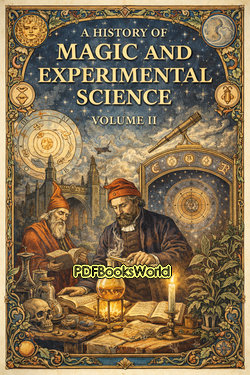
A History of Magic and Experimental Science, Volume 2 (of 2)
by Lynn Thorndike
Exploring the World Where Magic and Science Once Walked Together
A History of Magic and Experimental Science (Vol. II) by Lynn Thorndike is a monumental study of medieval intellectual history. In this volume, Thorndike examines the relationship between magic, science, religion, and philosophy during the twelfth and thirteenth centuries, a period of remarkable intellectual growth in Europe. Rather than treating magic and science as completely separate subjects, he demonstrates how scholars of the Middle Ages often viewed them as interconnected paths toward understanding the natural world.
The book remains one of the most influential works in the history of science because of its extensive research and detailed examination of medieval manuscripts, thinkers, and traditions. Thorndike's goal is not simply to describe magical beliefs but to show how early scientific inquiry developed alongside them.
A Window into Medieval Thought
Modern readers often think of science and magic as opposites. However, medieval scholars frequently studied astronomy, medicine, alchemy, astrology, and natural philosophy together. Thorndike explores this intellectual landscape, revealing a world in which learned individuals sought explanations for natural phenomena through a mixture of observation, tradition, and belief.
By examining historical records and scholarly writings, the author shows how ideas evolved over time and contributed to the eventual emergence of modern scientific thinking. The result is a richer understanding of how knowledge developed during the Middle Ages.
Important Figures Featured in the Volume
- Peter Abelard: A philosopher and theologian whose ideas influenced medieval scholarship.
- Hugh of St. Victor: A thinker known for his contributions to education and religious studies.
- Medieval Astrologers: Scholars who sought to understand the influence of celestial bodies.
- Natural Philosophers: Individuals attempting to explain the workings of nature through reason and observation.
Thorndike uses these figures to illustrate the diverse intellectual traditions that shaped medieval Europe. Their writings provide valuable insight into the questions that occupied scholars during the period.
The Relationship Between Magic and Knowledge
One of the book's most fascinating themes is the role magic played in the pursuit of knowledge. Medieval thinkers often believed that hidden forces existed within nature and that understanding these forces could reveal deeper truths about the universe. As a result, subjects now considered mystical were frequently studied alongside mathematics, astronomy, and medicine.
Thorndike does not simply dismiss these beliefs. Instead, he examines them within their historical context, helping readers understand why educated individuals found them persuasive and how they influenced intellectual development.
Major Topics Explored
- Astrology: The belief that celestial bodies influence earthly events.
- Alchemy: Early experiments involving matter, transformation, and natural processes.
- Medieval Science: Efforts to understand nature through observation and reasoning.
- Religious Thought: The interaction between faith and intellectual inquiry.
These subjects reveal the complexity of medieval learning and demonstrate how different fields of study often overlapped.
Lynn Thorndike's Scholarly Achievement
Lynn Thorndike was one of the leading historians of science in the twentieth century. His multi-volume study remains an important reference for researchers because of its depth, scope, and careful use of historical sources. He devoted decades to investigating manuscripts and texts that shed light on the development of scientific and magical traditions.
His work helped transform scholarly understanding of the Middle Ages by showing that the period was far more intellectually active and complex than many earlier historians had assumed.
The Lasting Importance of the Book
Although modern science has moved far beyond many of the beliefs discussed in the volume, the historical questions Thorndike explores remain important. Understanding how people sought knowledge in the past helps explain the origins of many modern disciplines and reveals the gradual process through which scientific methods evolved.
The book also highlights the human desire to understand the unknown, a motivation that has driven both scientific discovery and philosophical inquiry throughout history.
Why A History of Magic and Experimental Science (Vol. II) Remains Essential Reading
A History of Magic and Experimental Science (Vol. II) is more than a study of medieval magic. It is a detailed examination of how knowledge developed during a crucial period in European history. Through its exploration of scholars, beliefs, and intellectual traditions, Lynn Thorndike provides readers with a deeper appreciation for the complex relationship between magic, religion, and early science. The book remains a landmark achievement for anyone interested in the history of ideas, scientific development, and medieval culture.
Similar Genres
About the Author
Lynn Thorndike was an American historian, medieval scholar, and educator whose groundbreaking research transformed the study of the history of science, medicine, and intellectual thought. Explore Lynn Thorndike books to discover the author's life, literary career, and access notable works.