
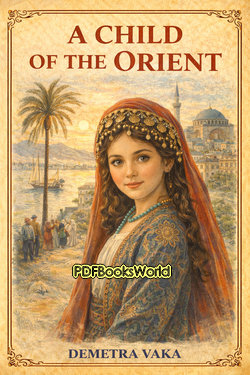
A Child of the Orient
by Demetra Vaka
A Personal Journey Between Cultures and Traditions
A Child of the Orient by Demetra Vaka is a reflective and deeply personal work that explores life, identity, and cultural experience in the Eastern Mediterranean world. Drawing upon her own background and observations, Vaka presents a portrait of a society often misunderstood by Western audiences, offering readers a more intimate and nuanced perspective on customs, family life, education, and social expectations.
The book belongs to a tradition of autobiographical and cultural writing that seeks to bridge different worlds. Through personal memories and thoughtful commentary, Vaka introduces readers to the environment in which she was raised while examining the challenges and opportunities that arise when individuals encounter different cultural traditions.
The result is both a memoir and a cultural study, enriched by firsthand experience and thoughtful reflection.
Growing Up in the East
The title emphasizes childhood, and much of the book's appeal comes from its portrayal of the author's early years. Vaka describes the influences that shaped her understanding of family, society, and personal identity.
Through recollections of daily life, readers gain insight into a world governed by customs and values that may differ from those familiar to Western audiences. These experiences are presented not as distant curiosities but as lived realities that helped form the author's character and worldview.
By focusing on childhood, the narrative captures the process through which cultural traditions are passed from one generation to the next.
Family and Social Expectations
A significant portion of the book examines the role of family within society. Relationships between parents, children, relatives, and community members help define the social environment in which the author grows up.
Vaka pays particular attention to expectations placed upon young women and the ways in which tradition influences personal choices. Her observations illuminate both the strengths and limitations of the social structures she encountered.
These discussions provide valuable insight into the cultural norms of the period while remaining grounded in personal experience.
A Meeting of Cultures
One of the most compelling themes in the book is the encounter between Eastern and Western perspectives. Vaka writes during a time when interest in cultural exchange was increasing, yet misunderstandings between different societies remained common.
Her work seeks to challenge simplistic stereotypes by presenting a more complex and human picture of life in the East. Through personal narrative, she demonstrates that cultures cannot be fully understood through assumptions alone.
This effort to foster understanding gives the book significance beyond its autobiographical elements.
Demetra Vaka's Literary Voice
Demetra Vaka writes with clarity, intelligence, and sensitivity. Her style combines descriptive detail with thoughtful reflection, allowing readers to engage with both the events of her life and the broader cultural questions they raise.
Rather than presenting a purely nostalgic account, she often analyzes the customs and institutions she describes. This balance between personal memory and critical observation adds depth to the narrative.
Her ability to explain unfamiliar traditions in an accessible manner contributes greatly to the book's effectiveness.
Themes of Identity and Belonging
Throughout the work, Vaka explores questions that remain relevant today. Identity, belonging, and cultural understanding are central concerns, particularly for individuals who move between different social or national environments.
Several themes recur throughout the narrative:
- The influence of childhood experiences.
- The relationship between tradition and change.
- The role of education in personal development.
- The search for understanding across cultural boundaries.
These themes give the book a lasting relevance that extends beyond its historical setting.
A Valuable Historical Perspective
Modern readers can appreciate A Child of the Orient both as a personal memoir and as a historical document. The book preserves observations about a society undergoing change while providing insight into attitudes, customs, and daily life that might otherwise be overlooked.
Because it is rooted in firsthand experience, the narrative offers perspectives that complement broader historical studies and enrich understanding of the period.
Final Thoughts
A Child of the Orient by Demetra Vaka is an engaging and thoughtful exploration of childhood, culture, and identity. Through personal memories and cultural reflection, the author creates a bridge between different worlds, encouraging readers to look beyond stereotypes and appreciate the complexity of human experience.
For readers interested in memoir, cultural history, women's experiences, and cross-cultural understanding, this work remains a rewarding and insightful read.
Similar Genres
About the Author
Demetra Vaka was an Ottoman Greek-American journalist, novelist, translator, and travel writer whose books introduced Western readers to the cultures, traditions, and daily life of the Eastern Mediterranean and the Ottoman Empire. Drawing upon her personal experiences and multicultural background, she wrote with insight and sensitivity about the societies in which she lived. Explore Demetra Vaka books to discover the author's life, literary career, and access notable works.