
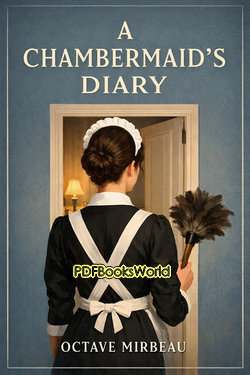
A Chambermaid's Diary
by Octave Mirbeau
A Sharp and Uncomfortable Portrait of Society
Darkly humorous, provocative, and deeply critical of social hypocrisy, A Chambermaid’s Diary by Octave Mirbeau remains one of the most daring French novels of its time. Through the observations of a chambermaid moving between wealthy households, the novel exposes hidden corruption, class prejudice, greed, and moral contradiction beneath the surface of respectable society.
Rather than presenting aristocratic life as elegant or admirable, Mirbeau reveals a world filled with manipulation, cruelty, selfishness, and social performance. The result is a work that feels both satirical and psychologically unsettling.
A Different Perspective on Wealth and Power
The story is told through the diary entries of Célestine, a servant who witnesses the private behavior of upper-class families from a position few others could occupy. Because she moves quietly through these households, she becomes an observer of secrets, scandals, and hidden tensions.
Her perspective allows the novel to criticize social systems from the inside rather than from a distant moral viewpoint.
What Makes the Novel Distinctive
- Sharp social satire and criticism
- Psychological realism and dark humor
- A unique narrator with insider observations
- Exploration of class inequality and hypocrisy
- Bold and controversial themes for its era
The Novel’s Criticism of Society
Mirbeau uses the experiences of Célestine to question social respectability and moral authority. Wealthy characters who appear refined in public often reveal dishonesty, cruelty, or corruption behind closed doors.
The novel suggests that power and privilege frequently allow immoral behavior to remain hidden beneath appearances of sophistication and tradition.
Major Themes Explored Throughout the Story
- Class division and social inequality
- Hypocrisy within respectable society
- Power, exploitation, and corruption
- The hidden lives of wealthy households
- The conflict between appearance and reality
Why the Book Still Feels Modern
Modern readers continue finding the novel relevant because its social criticism still resonates today. Issues involving inequality, abuse of power, hidden corruption, and social performance remain familiar in contemporary society.
The honesty of Célestine’s narration also gives the novel an emotional directness that feels surprisingly modern for a nineteenth-century work.
Readers interested in realist and satirical fiction often explore the literary movement of realism and social criticism to better understand the artistic traditions that influenced writers like Octave Mirbeau.
Octave Mirbeau’s Literary Influence
Octave Mirbeau became known for challenging social conventions through fiction, journalism, and political commentary. His writing often confronted uncomfortable realities that polite society preferred to ignore.
This fearless approach helped establish him as an important voice in French literary realism and social satire.
Reasons the Novel Continues to Be Studied
- Bold criticism of social institutions
- Complex and psychologically realistic narration
- Important contribution to French realism
- Exploration of power and morality
- Lasting influence on modern social fiction
The Enduring Power of Social Satire
Stories that expose hypocrisy and hidden corruption often remain relevant across generations because societies continue struggling with inequality and moral contradiction. A Chambermaid’s Diary survives not only because of its historical value but because its observations about human behavior still feel recognizable today.
Its blend of realism, satire, and psychological insight gives the novel lasting literary importance.
Final Thoughts
A Chambermaid’s Diary remains one of the most daring and insightful social novels of its era. Through the sharp observations of Célestine, Octave Mirbeau exposed the hidden corruption and hypocrisy beneath respectable society with remarkable honesty and intelligence. Its enduring relevance ensures its place among the classic works of social satire and psychological realism.
Similar Genres
About the Author
Octave Mirbeau was a French novelist, playwright, journalist, and art critic whose fearless writing challenged the social and political conventions of his time. Known for his sharp observations and independent thinking, he explored themes of inequality, power, hypocrisy, and human nature through both fiction and essays. Explore Octave Mirbeau books to discover the author's life, literary career, and access notable works.